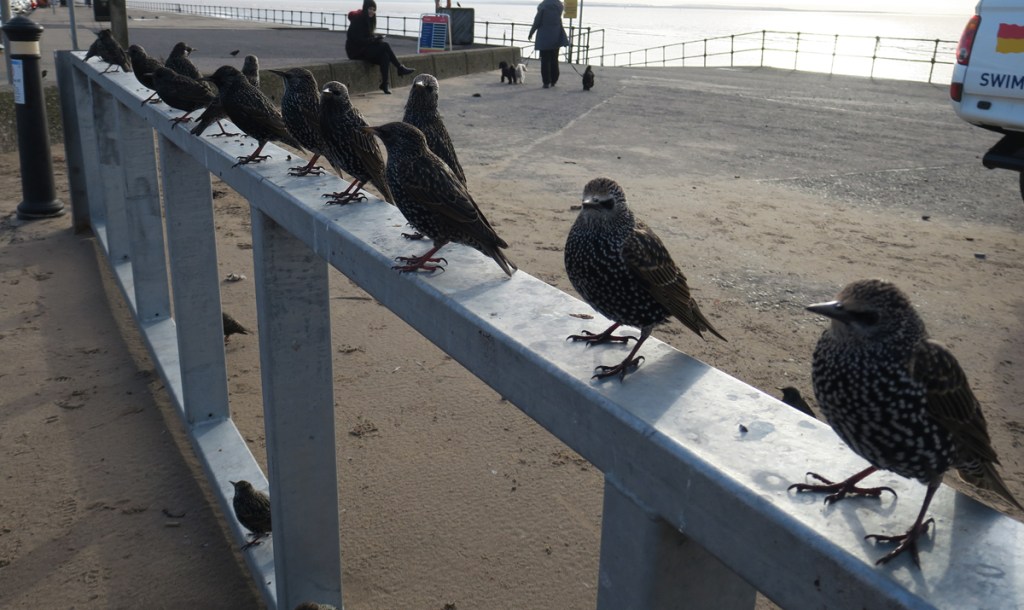
During autumn, Britain’s Starling population increases dramatically as large numbers arrive from continental Europe to spend the winter here. Many come from northern and eastern Europe, including Scandinavia, the Baltic region, Poland and countries farther east, where colder winters and snow make feeding increasingly difficult.
Migration begins during September and builds through October and November, with birds crossing the North Sea and arriving along Britain’s east coast. These migrants join our resident Starlings and may travel considerable distances within Britain in search of good feeding areas.
The influx helps produce the huge winter flocks and spectacular evening murmurations for which Starlings are famous. Ringing recoveries have demonstrated just how mobile they can be, with some Starlings wintering in Britain having travelled well over 1,000 km from their breeding areas.
As spring approaches, many of these continental visitors leave Britain again, heading back across the North Sea to their breeding grounds.







Leave a Reply