
The Vestal Cuckoo Bee (Bombus vestalis) is one of Britain’s most fascinating bumblebees because, unlike most species, it does not build its own nest or collect pollen to rear its young. Instead, it is a social parasite, relying entirely on the nests of another bumblebee species – almost exclusively the Buff-tailed Bumblebee. This unusual lifestyle has earned it the common name “cuckoo bee”, reflecting its similarity to the behaviour of the Common Cuckoo, which lays its eggs in the nests of other birds.
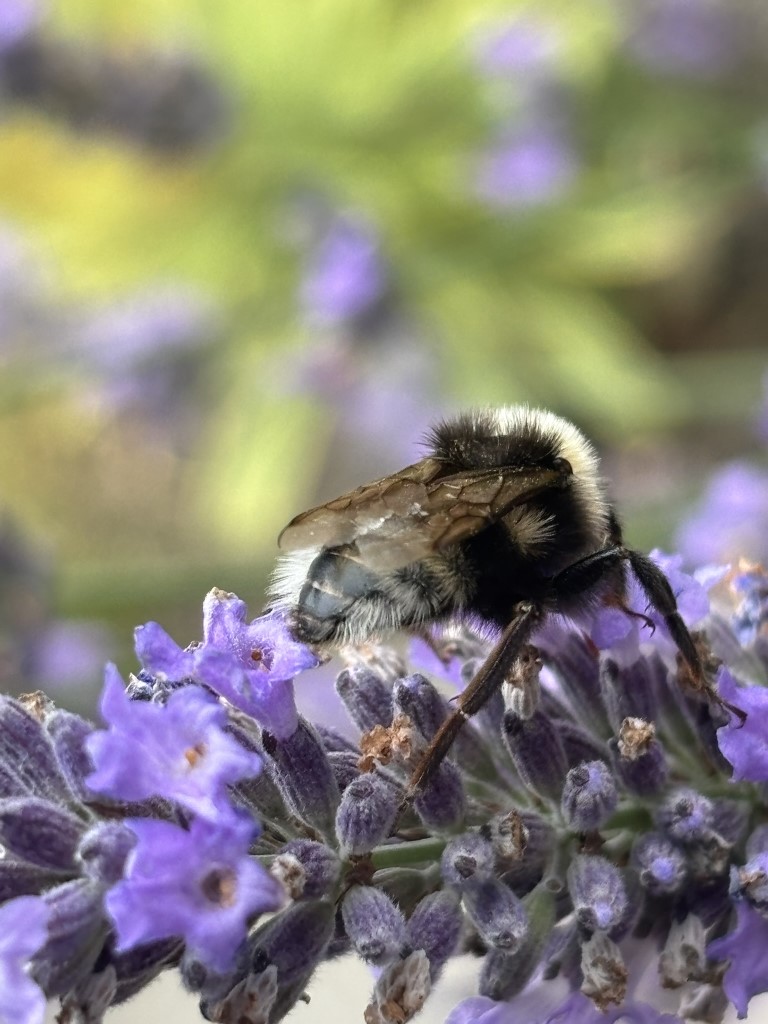
After emerging in late spring, a female Vestal Cuckoo Bee spends time feeding on nectar while searching for an established Buff-tailed Bumblebee colony. Once she locates a suitable nest, she enters it and, after overcoming or killing the resident queen, takes control of the colony. The host workers then continue their normal duties, unknowingly raising the cuckoo bee’s offspring instead of producing more of their own colony. Because the workers gather all the pollen needed to feed the developing larvae, female Vestal Cuckoo Bees have no pollen baskets (corbiculae) on their hind legs, a useful feature for distinguishing them from true worker bumblebees.
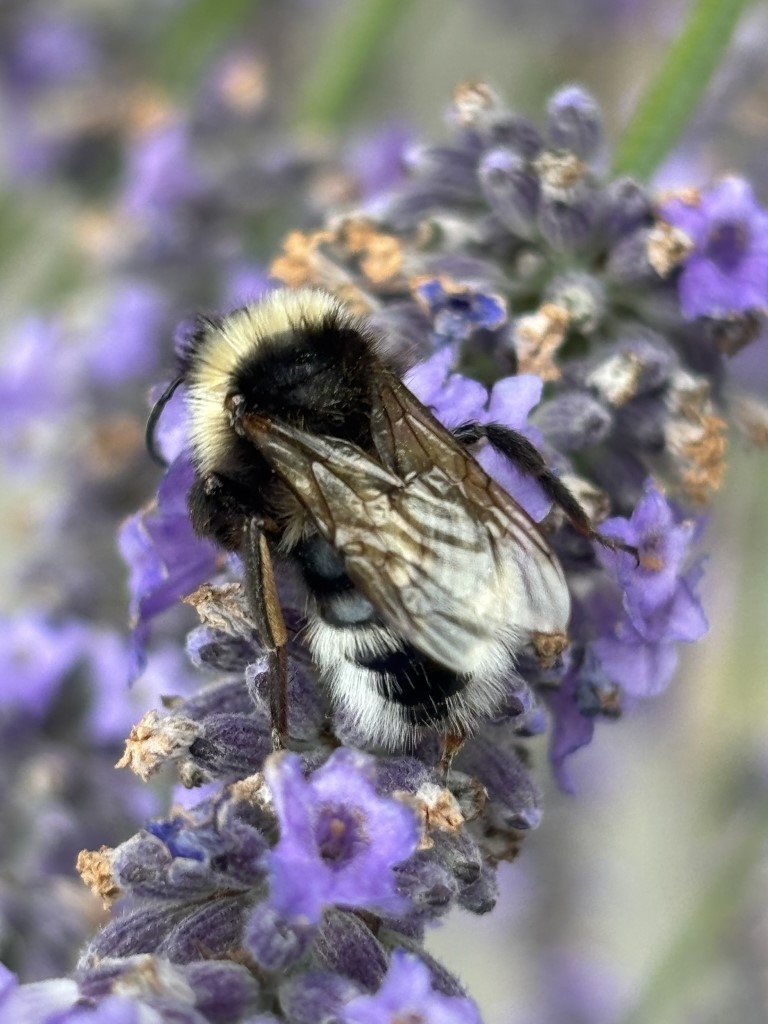
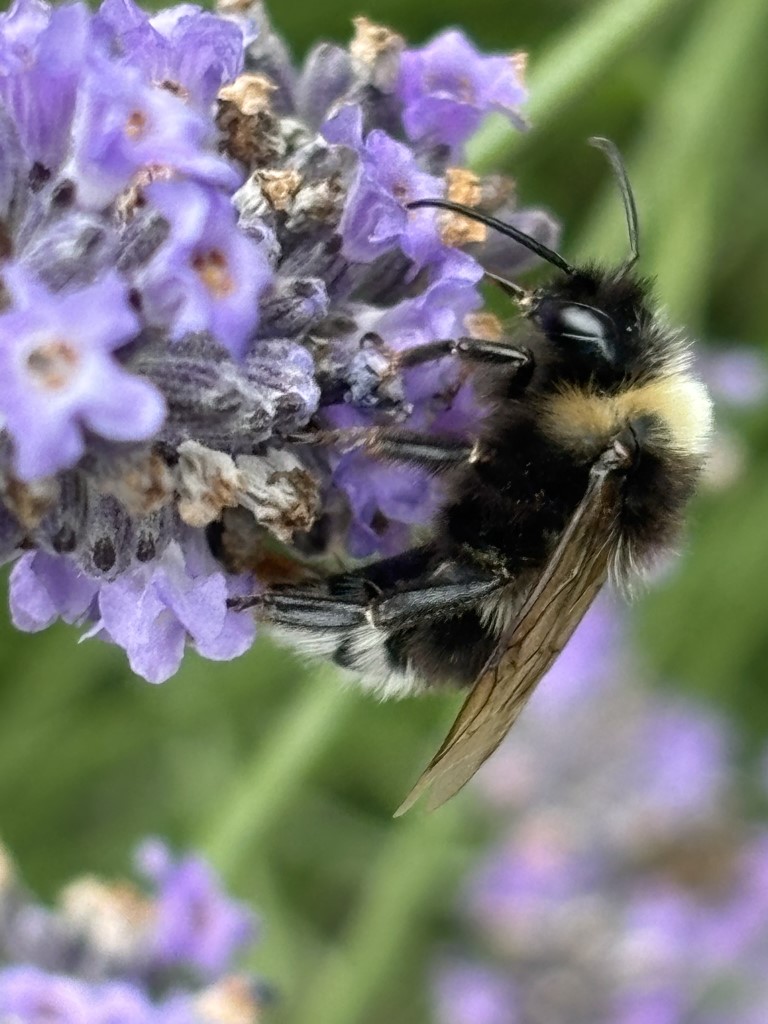
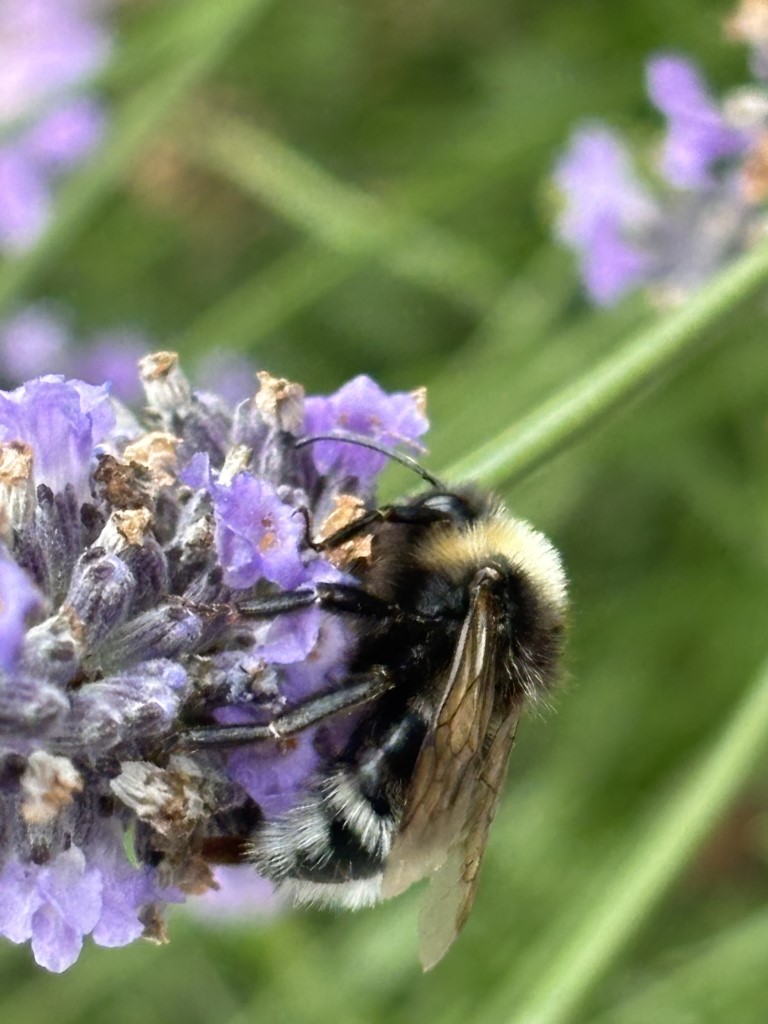
Vestal Cuckoo Bees are among the larger British bumblebees, with females reaching around 20–23 mm in length. They are predominantly black with two yellow bands on the thorax and abdomen and a distinctive white tail, making them superficially similar to their Buff-tailed Bumblebee host. Males and females can be seen visiting a wide range of flowers for nectar, particularly thistles, knapweeds, brambles and other late-flowering species. They are found in gardens, farmland, parks, brownfield sites and flower-rich grasslands wherever healthy populations of Buff-tailed Bumblebees occur.
Although they may appear uncommon, Vestal Cuckoo Bees are widespread across much of southern and central Britain and have been expanding their range northwards in recent decades, mirroring the success of the Buff-tailed Bumblebee. Their presence is often considered an indicator of a healthy host population, since cuckoo bees can only thrive where sufficient numbers of their host species exist. Conserving flower-rich habitats and nesting opportunities for Buff-tailed Bumblebees therefore also benefits the Vestal Cuckoo Bee, highlighting the intricate ecological relationships that exist between Britain’s pollinating insects.
Images; Vestal Cuckoo Bee (Bombus vestalis) feeding on English Lavender Lavandula angustifolia in Cumbria 02/08/2026 (c) Andrew P. Chick



Leave a Reply