
The Lesser Horseshoe Bat (Rhinolophus hipposideros) is one of Britain’s smallest and most distinctive bat species. Adults have a wingspan of around 20–25 cm and weigh just 4–9 g. They are easily recognised by their characteristic horseshoe-shaped noseleaf, which is used to focus the high-frequency echolocation calls that enable them to navigate and hunt in complete darkness. When at rest they wrap their wings completely around their bodies, giving them a cocoon-like appearance unlike any other British bat.
In the United Kingdom, the Lesser Horseshoe Bat has a predominantly western distribution, with strong populations in south-west England, Wales, western Herefordshire and Shropshire, together with more localised populations extending into parts of the West Midlands and north-west England. The screen grab below is taken from the NBN Atlas – see https://species.nbnatlas.org/species/NHMSYS0000080177
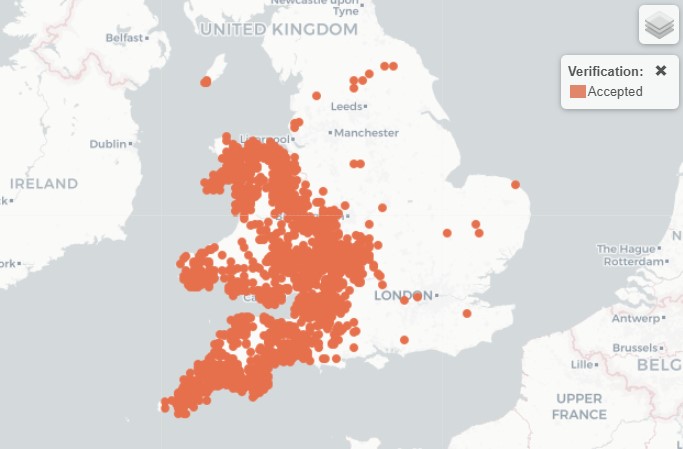
At present, the Lesser Horseshoe Bat is not known to occur in Cumbria. However, the species has been gradually expanding its range in Britain over recent decades as populations have recovered from historic declines. With continued population growth, warmer climatic conditions associated with climate change, and the increasing availability of suitable habitat and roosting sites, it is conceivable that the species could colonise parts of Cumbria in the future.
Lesser Horseshoe Bats rely on a network of suitable roosts and high-quality foraging habitat. Summer maternity colonies are typically found in the roofs of older buildings, churches, barns and traditional farmhouses, where females gather to give birth to a single pup in June or July. During winter they hibernate in caves, mines, tunnels, cellars and other cool, humid underground sites. They are particularly sensitive to disturbance during hibernation and require stable environmental conditions throughout the winter months.
The species favours broadleaved woodland, wooded river valleys, hedgerows, orchards and traditional pasture, where it feeds mainly on small moths, caddisflies, midges and other nocturnal insects. Unlike many bats, Lesser Horseshoe Bats generally fly close to vegetation, following sheltered linear features such as hedgerows and woodland edges rather than crossing large open spaces. Conserving these connected landscapes, together with suitable roosting sites, will be essential if the species is to continue its gradual range expansion in Britain.
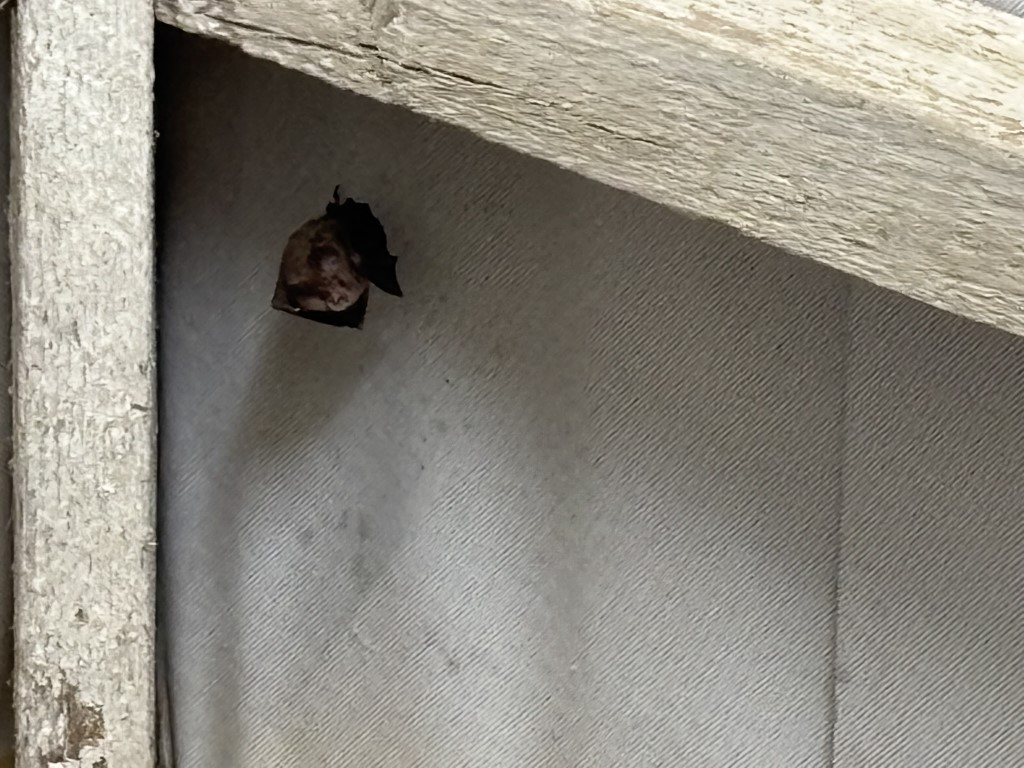
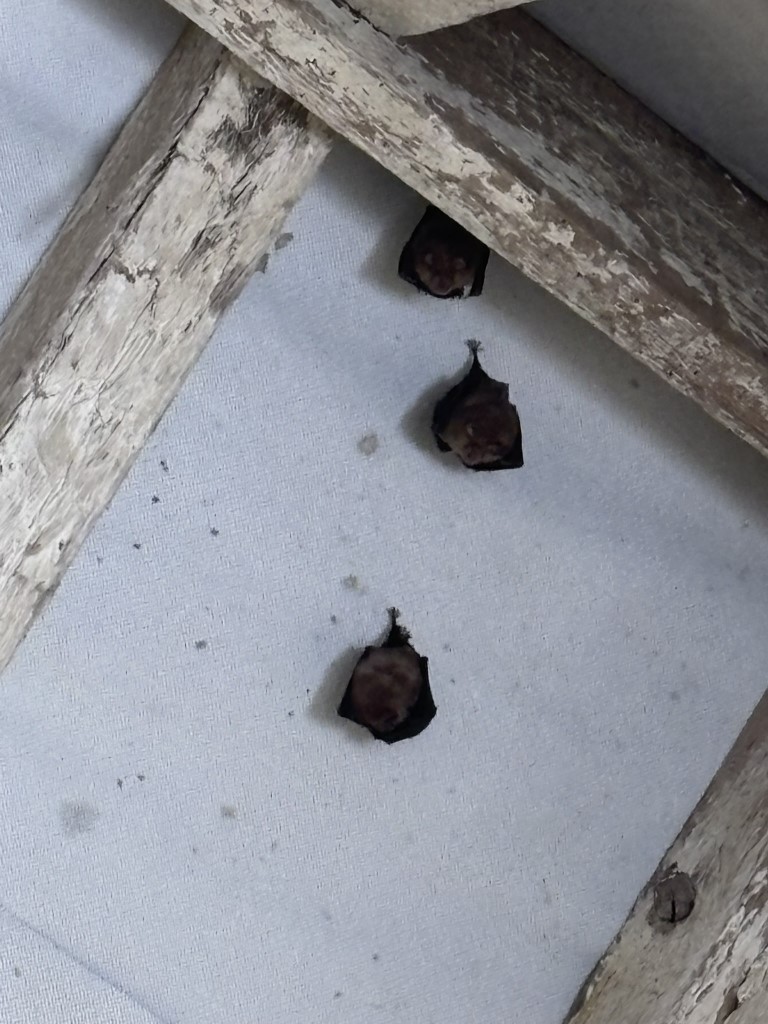
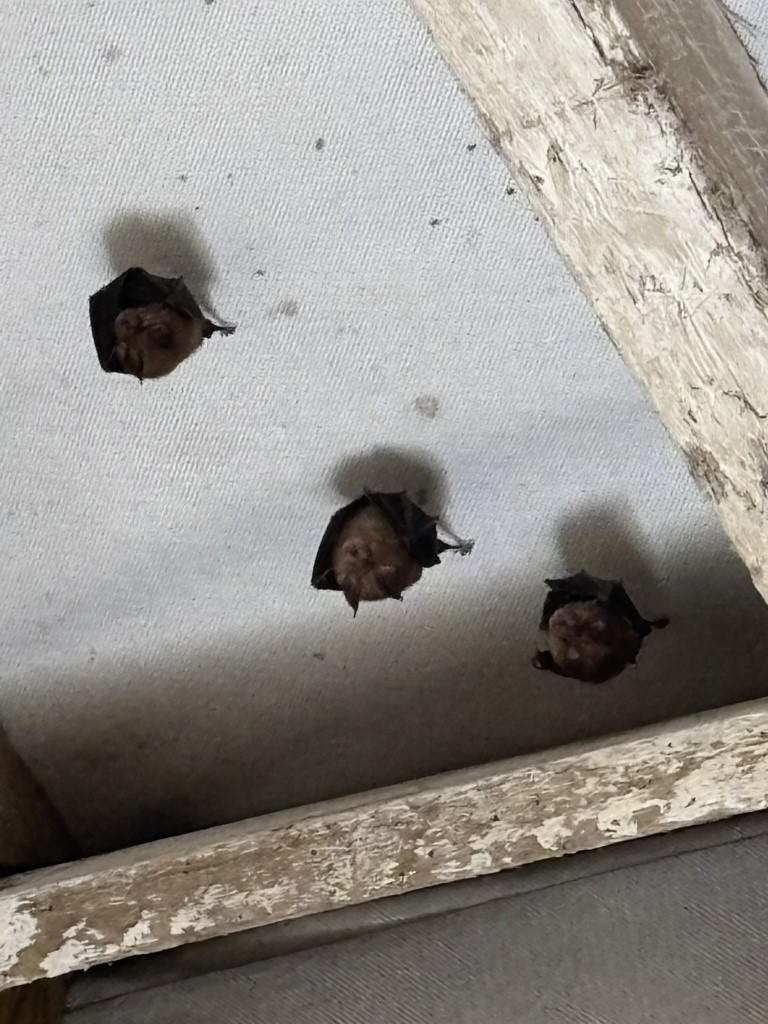
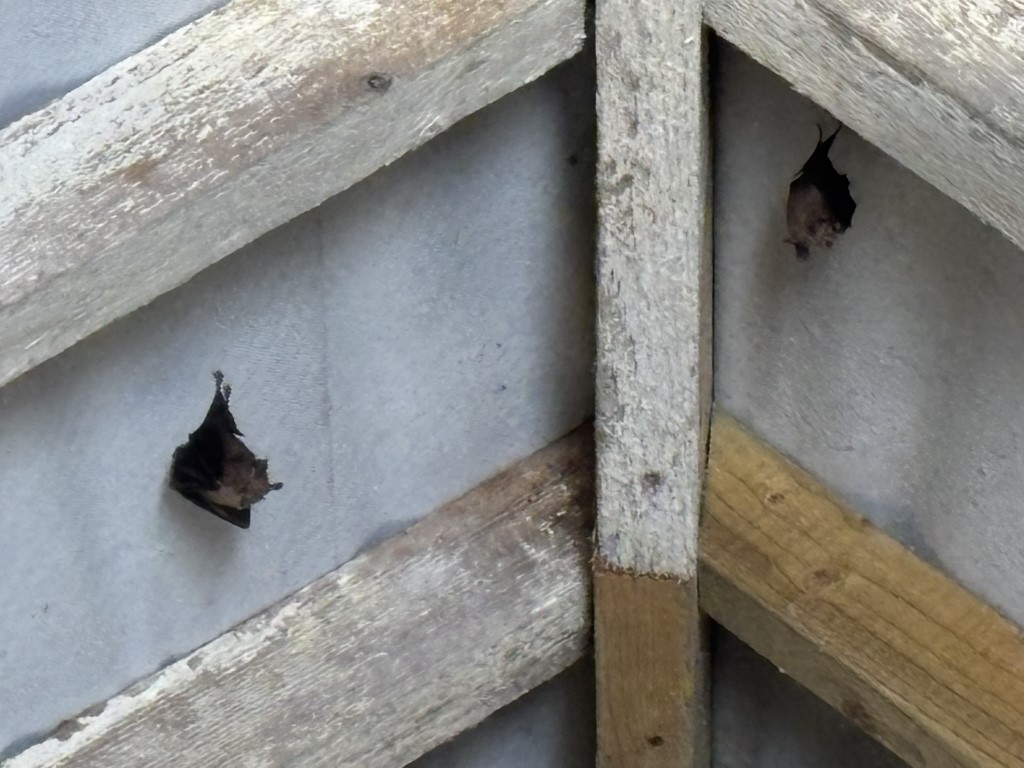
The following photographs of a Lesser Horseshoe Bat (Rhinolophus hipposideros) were taken under the authority of my Natural England Class 3 and Class 4 Bat Survey Licence during an inspection of a roof void. The visit included discussions with the property owner regarding the historic installation of a modern breathable roofing membrane, which can be seen in the accompanying images.
Modern breathable roofing membranes are a recognised conservation concern where bats are present. Unlike traditional bitumen felt, many breathable membranes have a fibrous, fleece-like surface that can snag the delicate claws and wing membranes of bats as they crawl beneath roof coverings. This can lead to bats becoming trapped, resulting in injury, dehydration or death. Consequently, where bat roosts are present or likely to occur, the use of non-bituminous breathable membranes should be carefully considered, and specialist ecological advice sought before any roofing works are undertaken.
The photographs illustrate both the presence of the Lesser Horseshoe Bat within the roof space and the type of roofing membrane that prompted discussion with the property owner, highlighting the importance of selecting bat-friendly roofing materials when carrying out repairs or refurbishment to buildings used by bats.



Leave a comment