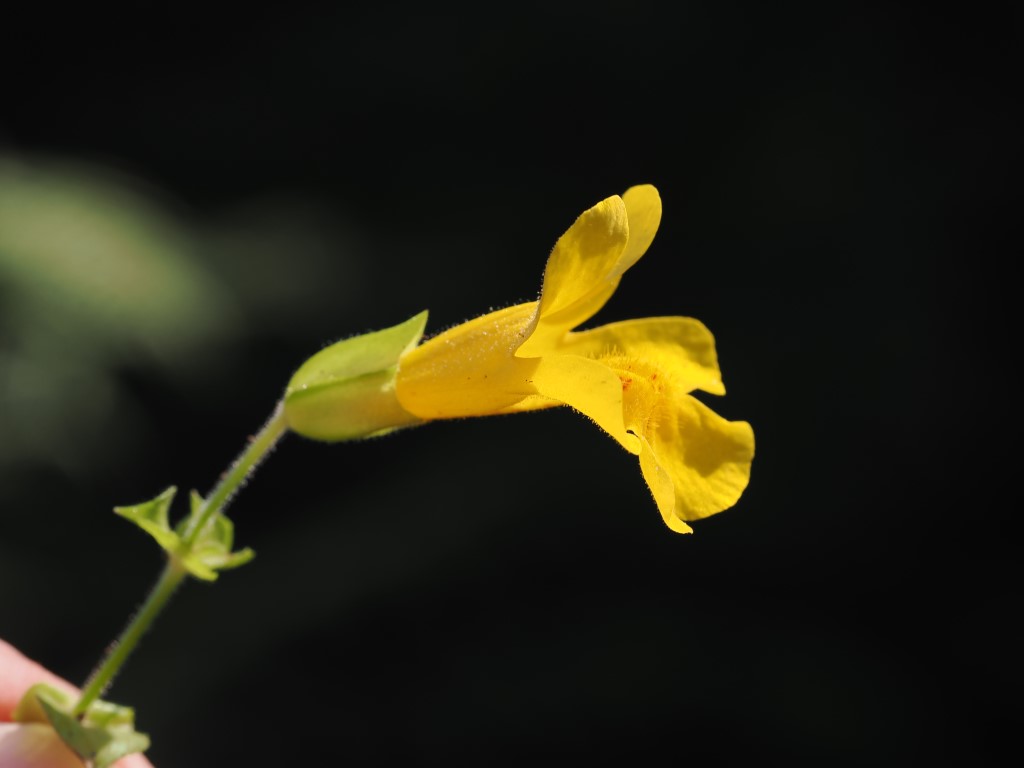
Monkeyflower (Erythranthe guttata, formerly Mimulus guttatus) is a striking plant of riverbanks, stream edges, ditches and other damp places. Its large, bright yellow flowers, usually patterned with distinctive reddish-brown spots, make it difficult to miss when growing beside water.
Flowering mainly from June through to September, Monkeyflower often forms conspicuous patches along streams and rivers. The curious shape and markings of the flower are said to resemble a monkey’s face, giving the plant its memorable common name.
Although now quite widespread in parts of Britain, Monkeyflower is not a native species. It originates from western North America and was introduced to Britain as an ornamental plant during the 19th century. It subsequently escaped from gardens and became naturalised, particularly alongside watercourses.
Despite its introduced origins, its flowers are visited by bees and other insects, while its preference for wet ground means it can add a wonderful splash of colour to riverbanks during the summer. In some places it can become quite abundant, creating impressive displays of yellow amongst the surrounding waterside vegetation.




 Andrew Chick Ecology
Leave a comment