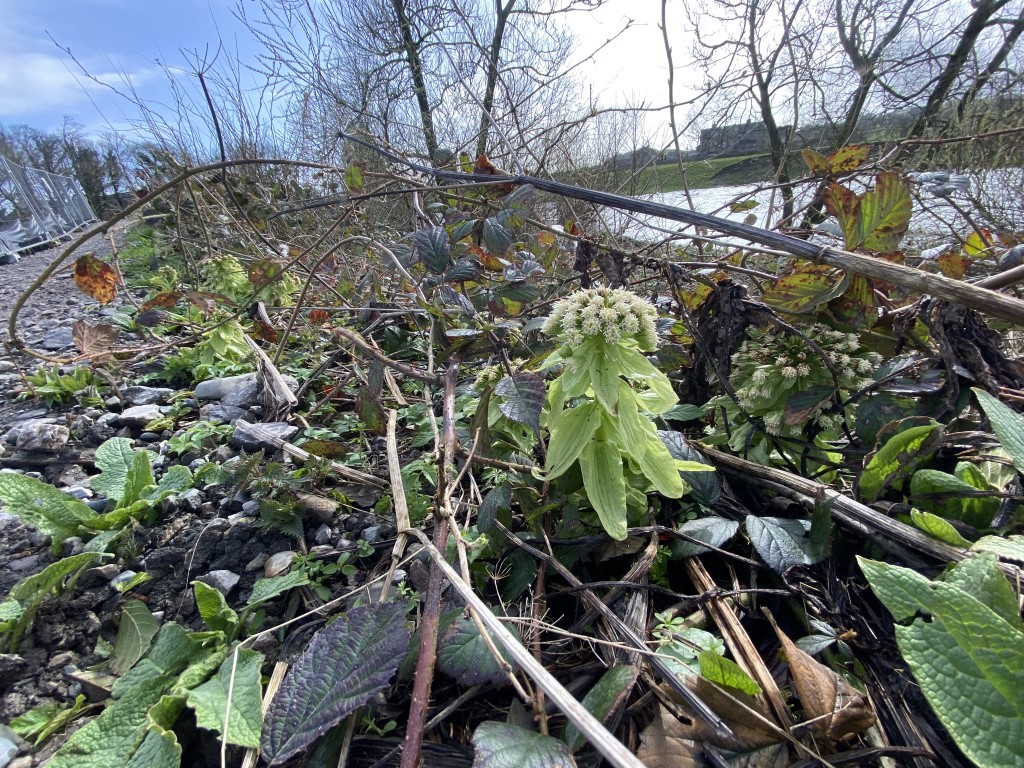
Common Butterbur (Petasites hybridus) is a distinctive perennial plant of riverbanks, stream sides, damp woodland and wet ground, where it can form extensive colonies. It is particularly noticeable in early spring, when its unusual flower spikes emerge before the leaves have fully developed.
The pinkish-purple flowers appear mainly from March to May, making Butterbur an important early source of nectar for bees and other insects. Male and female flowers occur on separate plants, with male plants being particularly widespread in Britain.
After flowering, the enormous heart-shaped leaves develop and can reach an impressive size, sometimes more than half a metre across. These dense stands of foliage can dominate damp river margins during the summer and make the plant almost impossible to overlook.
The name “Butterbur” is thought to come from the traditional practice of using its large leaves to wrap butter and keep it cool. By late summer, a well-established patch can create an almost tropical-looking mass of huge leaves, quite a transformation from the strange little flower spikes that appeared at the beginning of spring.




 Andrew Chick Ecology
Leave a comment