
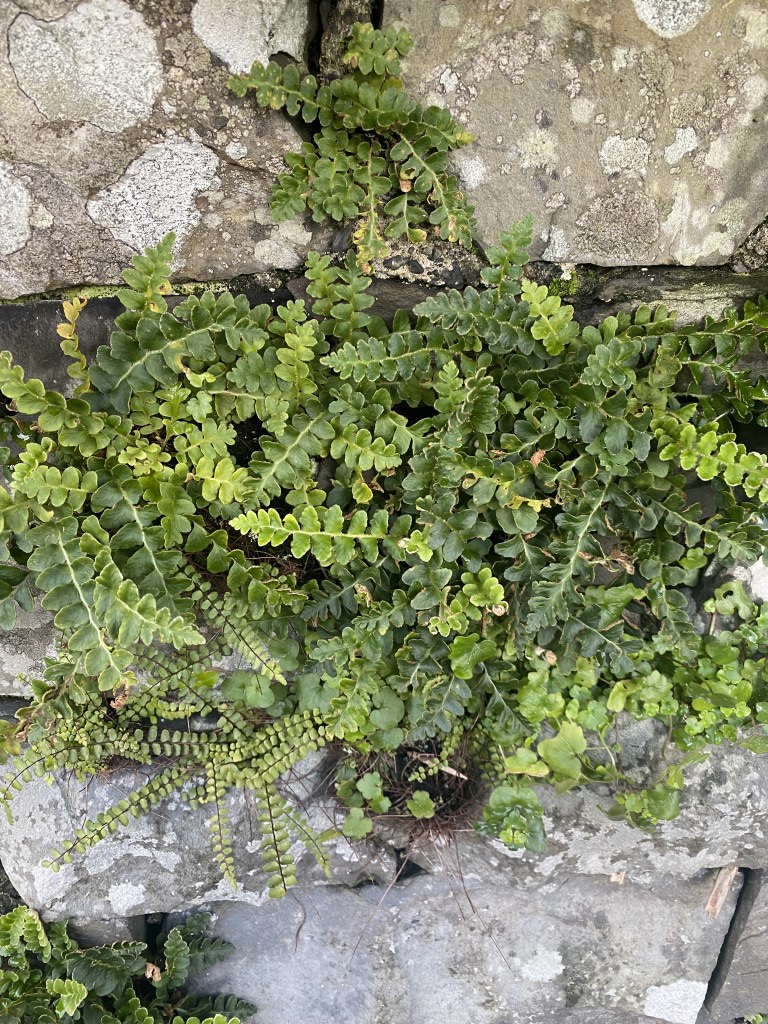
Rustyback (Asplenium ceterach) is a distinctive little evergreen fern, typically found growing in the cracks and crevices of old stone walls, limestone rocks, cliffs and other dry, rocky places. Its name comes from the dense covering of rusty-brown scales on the underside of the fronds, which contrast with the green upper surface and make the species relatively easy to identify.
Unlike many ferns, Rustyback is remarkably well adapted to hot, dry conditions. During prolonged dry weather the fronds curl inwards, exposing the rusty scales beneath and reducing water loss. They can appear brown and almost dead, but quickly uncurl and become green again following rain.
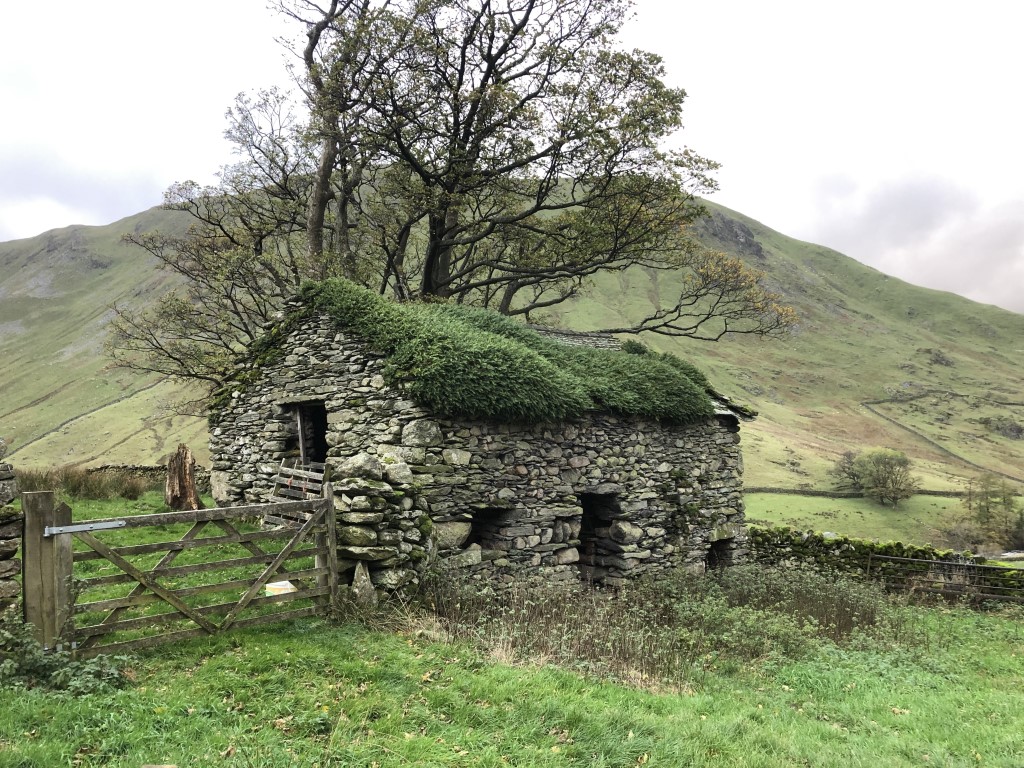
In Britain, Rustyback has a mainly western and southern distribution, with a strong association with limestone districts. It is particularly characteristic of old mortared walls, where small colonies may persist for many years. In northern England it is more localised, but Cumbria’s extensive limestone areas and abundance of old stone walls provide suitable habitat, and it can occasionally be encountered in surprisingly exposed situations.
Rustyback is a small fern, generally only 5–15 cm tall, but what it lacks in size it makes up for in character. A close look at the underside of a frond reveals the rich rusty colouring that gives this attractive and drought-tolerant fern its name.



Leave a Reply