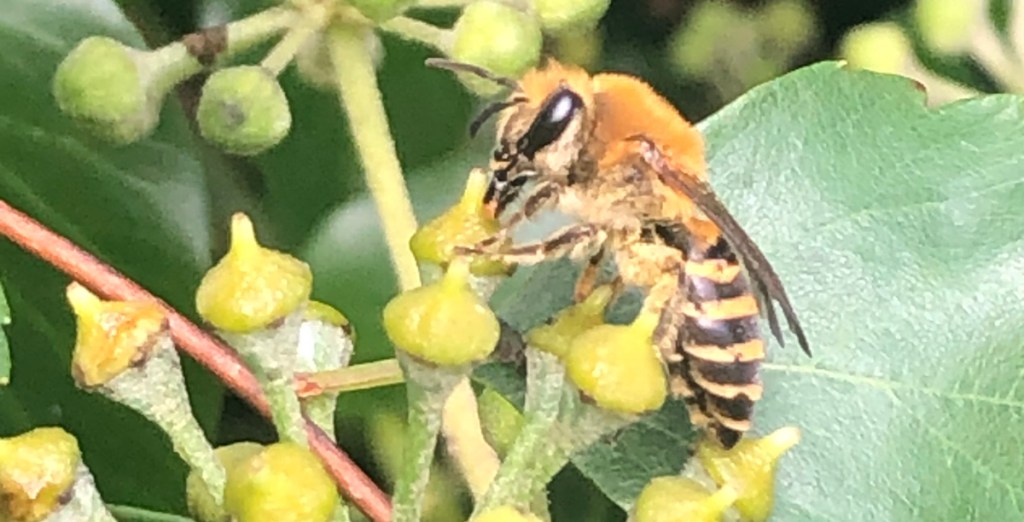
The Ivy Bee (Colletes hederae) is one of Britain’s most distinctive autumn-flying solitary bees. Unlike most of our bees, it is most active relatively late in the year, usually from September into October, when its principal food source, Ivy, is in flower.
Despite sometimes occurring in large numbers, Ivy Bees are solitary rather than social. Each female excavates her own nest, usually in bare or sparsely vegetated, well-drained soil. Favoured locations include south-facing banks, footpaths, gardens, quarries and other areas of exposed ground. Suitable sites may contain hundreds or even thousands of nests clustered closely together, giving the impression of a colony.
The species is a relatively recent arrival in Britain, being first recorded in Dorset in 2001. Since then it has spread remarkably rapidly and is now widespread across much of southern and central England, with its range continuing to expand.
Ivy Bees are important late-season pollinators, and flowering Ivy provides a particularly valuable source of both pollen and nectar at a time when relatively few other plants remain in flower. The bees are harmless and rarely sting, so nesting aggregations should normally be left undisturbed. Allowing Ivy to flower and retaining patches of suitable bare ground are two simple ways of helping this attractive and increasingly familiar autumn bee.



Leave a comment