
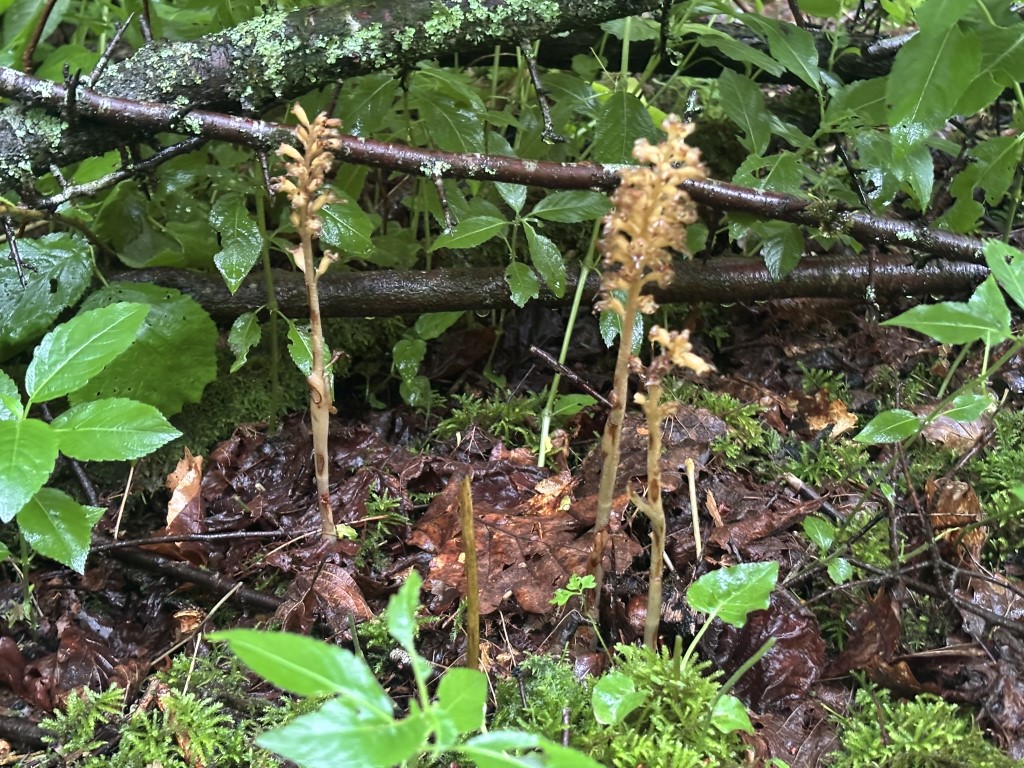
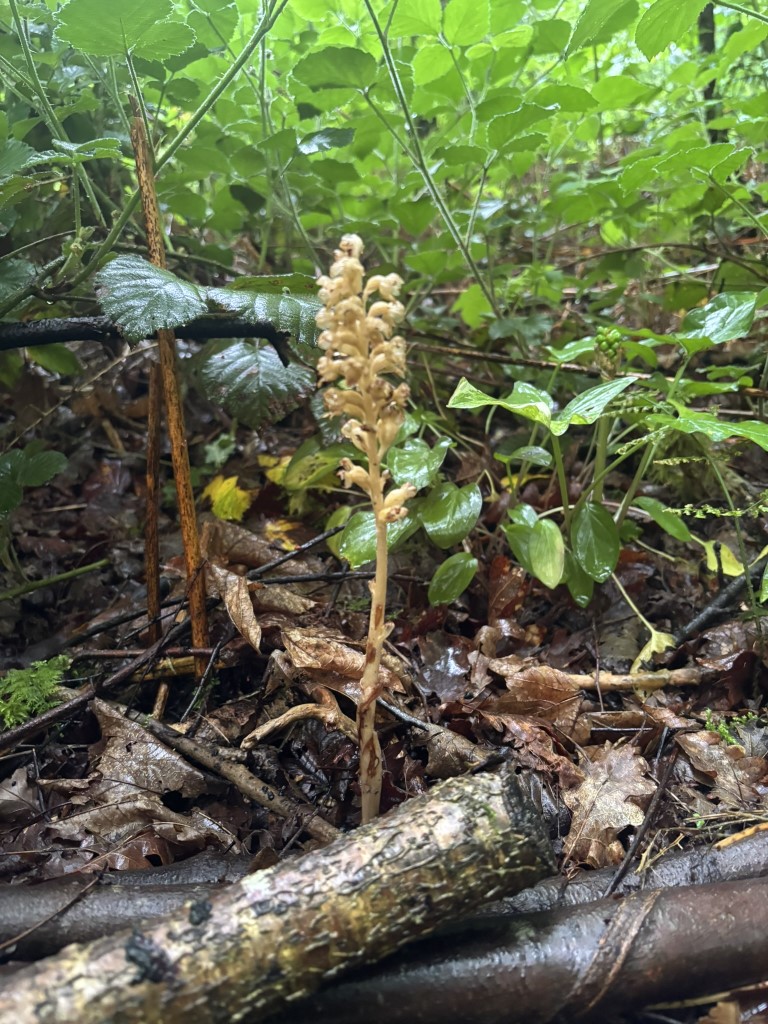
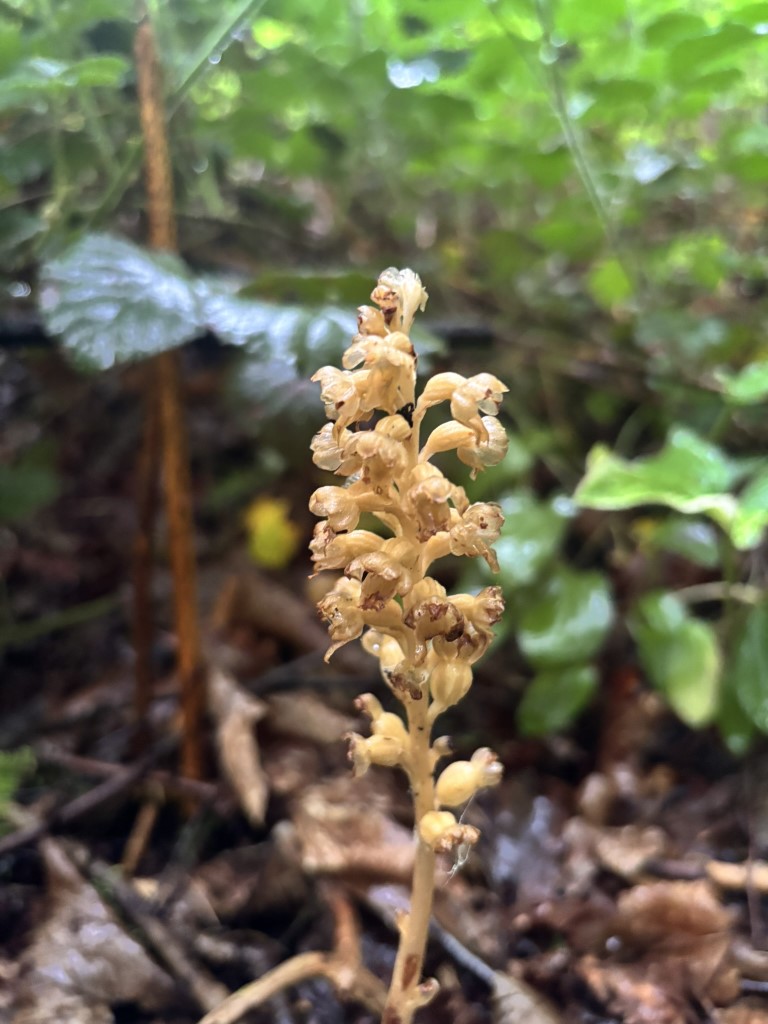
Bird’s-nest Orchid Neottia nidus-avis is one of Britain’s more unusual orchids. A plant of shady woodland, particularly mature beech and other broadleaved woods on calcareous soils, it lacks the green chlorophyll associated with most plants. Instead, its stems and flowers are a distinctive yellowish-brown to honey colour, allowing it to blend remarkably well with the surrounding leaf litter. Its English name comes from the dense mass of short, fleshy roots, which resembles a small bird’s nest.
Unlike most plants, Bird’s-nest Orchid does not photosynthesise. It obtains its nutrients through an association with soil fungi, making it mycoheterotrophic. Much of the plant’s life is spent underground, and flowering spikes may appear unpredictably between May and July. Plants can remain unseen for several years before reappearing, which makes assessing the true status of individual populations particularly difficult.
Nationally, Bird’s-nest Orchid has undergone a substantial decline, particularly in southern and eastern England, with the loss or deterioration of suitable ancient woodland habitat among the likely contributing factors. However, its secretive and erratic flowering behaviour means that it can easily be overlooked.
In Cumbria, the picture appears rather more encouraging. Bird’s-nest Orchid seems to be bucking the national trend, with more records made during the 21st century than during the final 25 years of the 20th century. Although it has disappeared from a number of sites documented in the county Flora, the discovery of new colonies has more than compensated for these apparent losses. Some supposedly lost populations may also simply be experiencing prolonged periods without visible flowering spikes.
Nevertheless, Bird’s-nest Orchid remains a rare plant in Cumbria, and any colony is noteworthy. Its unpredictable appearances are part of its fascination: a woodland seemingly devoid of the species for several years may suddenly produce a scattering of its strange, ghostly brown flower spikes once again.
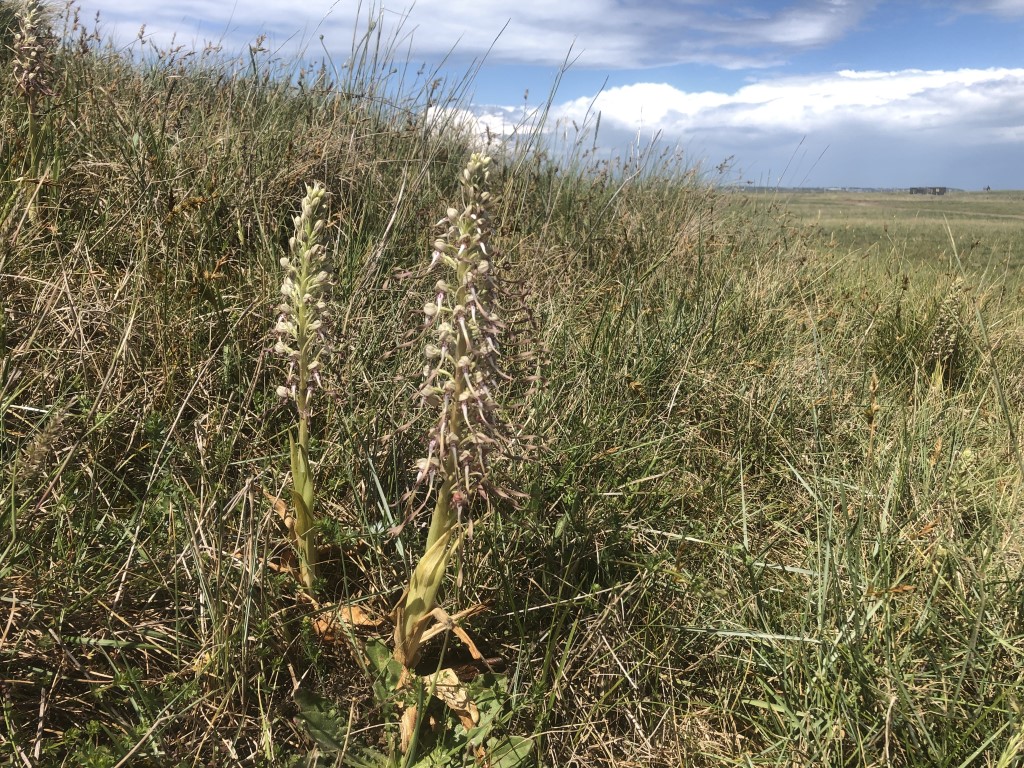
All photos from Cumbria (c) Andrew P. Chick 2026



Leave a comment