The Greater Butterfly-orchid (Platanthera chlorantha) is one of Britain’s most elegant native orchids. A tall, rather graceful plant, it produces a loose spike of greenish-white flowers above a pair of broad, glossy leaves at its base. Although individual flowers are relatively understated, a flowering colony can be a striking sight, particularly in the half-light of woodland or an old hay-meadow.
Flowering generally takes place from May to July, with June usually the peak month. The flowers have a long, slender nectar spur and are particularly adapted for pollination by night-flying moths. They release their strongest fragrance during the evening and at night, attracting moths which probe the spur for nectar and inadvertently pick up the orchid’s pollen masses, or pollinia.
Greater Butterfly-orchid can be confused with the closely related Lesser Butterfly-orchid (Platanthera bifolia). One of the most useful identification features is the arrangement of the pollinia within the flower. In Greater Butterfly-orchid they are widely separated and diverge towards their bases, whereas in Lesser Butterfly-orchid they are close together and approximately parallel. Greater Butterfly-orchid also tends to be a more robust plant with larger, greener flowers, although size alone is not a reliable identification feature.
Greater Butterfly-orchid occupies a surprisingly varied range of habitats. It is particularly associated with open deciduous woodland, woodland rides and clearings, old species-rich hay-meadows, calcareous grassland and scrubby grassland. In some parts of its range it also occurs along railway embankments and in coastal dune systems.
Many of these habitats depend upon traditional or relatively low-intensity management. Woodland populations can suffer when the canopy becomes too dense, while grassland populations may disappear following fertiliser application, reseeding, drainage or changes in cutting and grazing regimes. Like many orchids, plants can also vary considerably in abundance between years, making the status of small colonies difficult to assess from a single visit.
Distribution in Britain and Ireland
Greater Butterfly-orchid is widely but increasingly locally distributed across Britain and Ireland. Despite its broad geographical range, it has undergone a gradual and prolonged decline, with recent losses particularly marked in areas dominated by intensive agriculture.
The causes of this decline largely reflect changes to its habitats. Woodland populations have been affected by woodland destruction, coniferisation and changes in woodland management, while populations in grassland have suffered through the agricultural improvement of pastures and traditional hay-meadows. The loss of unimproved, flower-rich meadows has been particularly damaging to many orchid species.
Consequently, although Greater Butterfly-orchid remains widespread nationally, its occurrence is increasingly fragmented, and surviving populations associated with traditionally managed woodland and grassland are of considerable conservation importance.
Greater Butterfly-orchid in Cumbria
In Cumbria, Greater Butterfly-orchid is generally scarce or infrequent, although its distribution is distinctly localised. It is not uncommon between Kendal and the Kent Estuary, while another concentration occurs in the Sebergham area.
Within the county it is typically found in open woodland, traditional hay-meadows and along railway sides, usually where soils are base-rich or calcareous. There is also an interesting coastal element to its distribution, with the species occurring in dune-slacks along the west Cumbrian coast south of Silloth.
As elsewhere in Britain, the fate of Greater Butterfly-orchid in Cumbria has been closely linked to changes in traditional land management. In particular, both Greater and Lesser Butterfly-orchids have declined considerably following the agricultural ‘improvement’ of hay-meadows. Drainage, fertiliser application, reseeding and changes in cutting regimes can rapidly transform the relatively nutrient-poor, species-rich grasslands on which these orchids depend.
There is an interesting historical record involving the two British butterfly-orchids. The only authenticated Cumbrian record of Greater and Lesser Butterfly-orchids growing together comes from Hoff Lunn, Crosby Ravensworth, where both were recorded in a heathy pasture in the early 1970s. Sadly, the site was subsequently agriculturally reclaimed, providing a particularly telling example of the habitat losses experienced by these plants during the latter part of the twentieth century.
Greater Butterfly-orchid therefore remains a special component of the Cumbrian flora. Its surviving colonies, particularly those in old hay-meadows and long-established woodland, are reminders of habitats that were once much more widespread. Maintaining appropriate grazing, hay cutting and open woodland conditions will be important if this impressive orchid is to remain part of Cumbria’s flora.
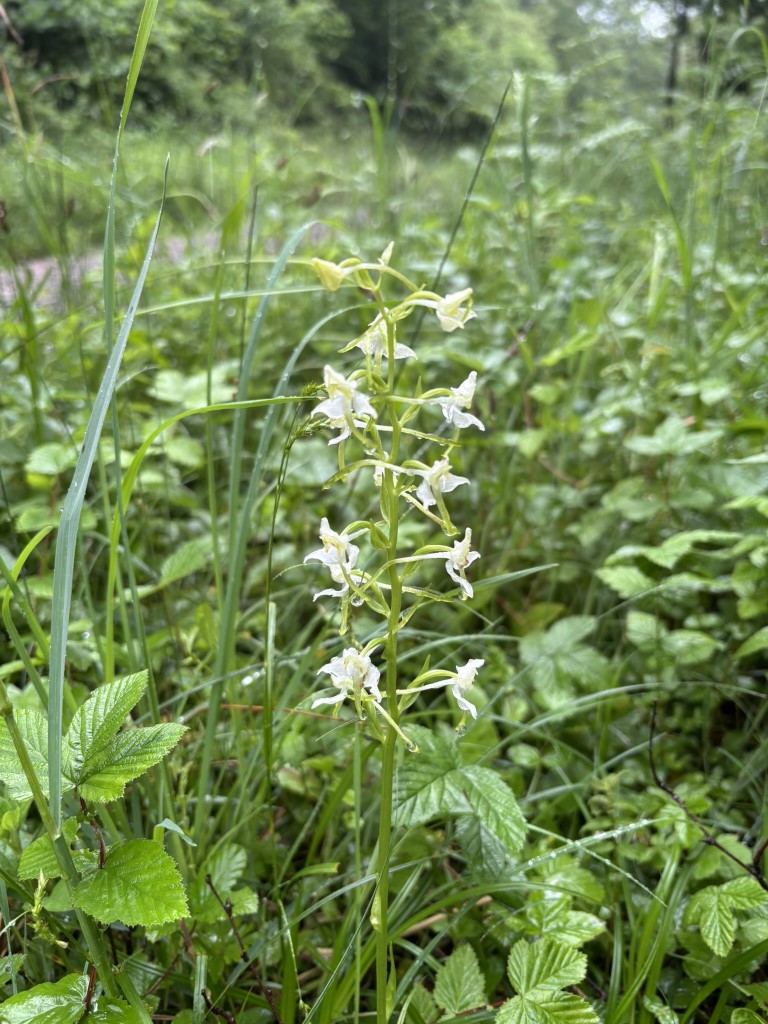

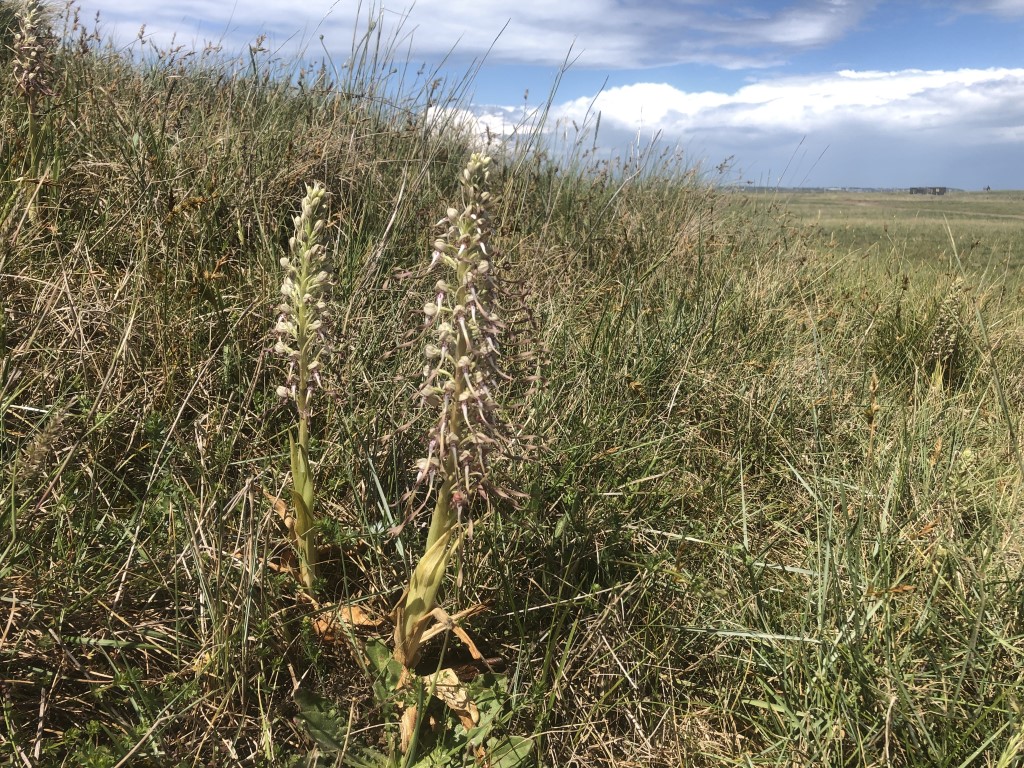
Greater Butterfly Orcid in the Lyth Valley 2026 (c) Andrew P. Chick



Leave a Reply