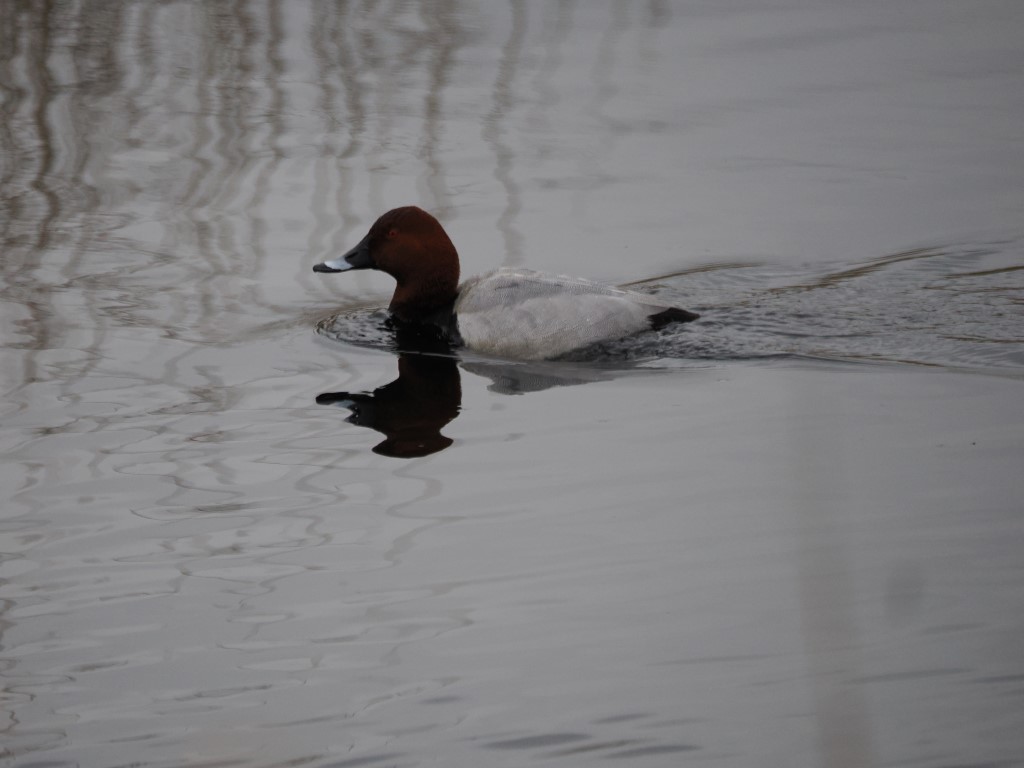
The Pochard Aythya ferina is a medium-sized diving duck associated with lakes, reservoirs, gravel pits and other relatively deep freshwater wetlands. Although familiar to many birdwatchers as a winter visitor, it is also a scarce and rather localised breeding bird in Britain.
The adult male is particularly distinctive, with a rich chestnut-red head and neck, black breast and rear end, and a finely vermiculated pale-grey body. The eye is bright red. Females are much more subdued, being predominantly brown, with a greyer-brown body and paler areas around the face. Like other diving ducks, Pochards sit relatively low in the water and typically feed by repeatedly diving below the surface.
Pochards have a varied diet. Aquatic plants, seeds and roots are important, but they also take aquatic invertebrates, molluscs and other small animal prey. Feeding conditions therefore depend upon the availability of suitable, productive freshwater habitats.
Status in the UK
The Pochard has undergone a substantial decline and is now Red-listed as a Bird of Conservation Concern in the UK. It is also regarded as Vulnerable at both European and global levels. Despite this conservation status, the species can still appear relatively numerous at some favoured wetlands during winter, when Britain’s small resident population is supplemented by migrants from continental Europe.
Current estimates suggest a UK wintering population of around 29,000 birds, but numbers have fallen dramatically. BTO data indicate a decline of approximately 72% between 1998 and 2023, together with a contraction in winter distribution. One factor is likely to be increasingly mild winters in continental Europe. With more wetlands remaining ice-free, fewer Pochards need to cross the North Sea to winter in Britain.
The British breeding population is very different in scale. Pochard is a scarce breeding bird, with the population estimated at around 720 pairs, the great majority occurring in England. Breeding birds are concentrated principally in lowland areas where suitable wetlands provide open water combined with well-vegetated margins, islands and secluded nesting habitat.
Breeding numbers have fluctuated considerably. Following an earlier increase, monitoring by the Rare Breeding Birds Panel indicated that numbers were broadly around 600–800 pairs during the decade to 2019. The relatively small size and restricted distribution of this breeding population means that Pochard remains an important conservation concern in England.
The contrast between the breeding and winter populations is therefore striking: tens of thousands may occur in Britain during winter, but only several hundred pairs remain to breed. Protecting good-quality freshwater wetlands is consequently important not only for Britain’s winter visitors but also for maintaining its small breeding population.
Pochard in Cumbria
In Cumbria, Pochard is primarily a scarce winter visitor and passage bird, and numbers remain incredibly low compared with those recorded historically and with many other common diving ducks. Even at apparently suitable lakes, reservoirs and coastal wetlands, the species can now be conspicuous by its absence.
Most birds do not begin to appear in the county until November onwards, after which small numbers may be encountered through the winter. The majority have departed again by the end of March, leaving Pochard distinctly scarce during spring and summer.
The seasonal pattern is particularly significant when considering its breeding status. Despite Pochard being a scarce but established breeding bird elsewhere in England, there was no confirmed breeding in Cumbria in either 2024 or 2025. Indeed, the very low number of birds remaining in the county into the breeding season means that even the possibility of breeding is now unusual.
This makes the present status of Pochard in Cumbria rather sobering. A species which remains a regular wintering duck nationally is now encountered locally in only very small numbers, principally during the colder months. With most birds arriving relatively late in the autumn and departing before the breeding season, Pochard should currently be regarded in Cumbria predominantly as a scarce winter visitor, with breeding at best an exceptional event.
Its fortunes in the county are worth following closely. The combination of a declining national winter population, a very small English breeding population and extremely low numbers in Cumbria means that even small changes in local occurrence could be significant.




Leave a Reply