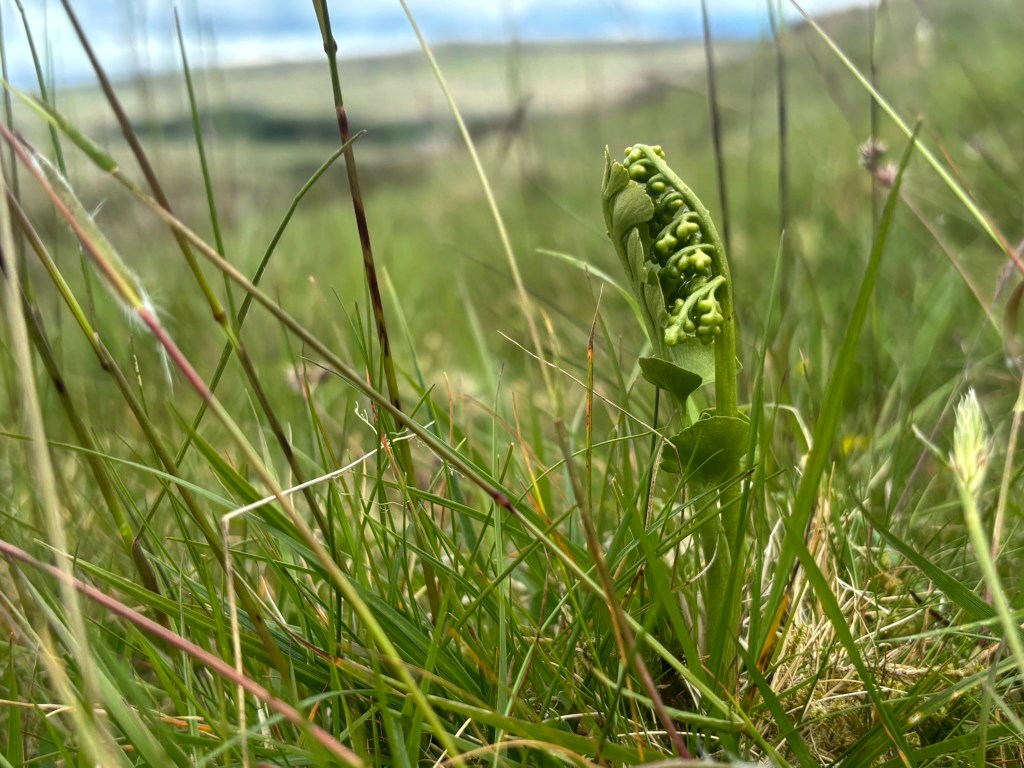
Moonwort Botrychium lunaria is a small and easily overlooked fern, typically associated with short, open grassland on well-drained, relatively nutrient-poor soils. Its distinctive single frond is divided into a leafy sterile section and an upright, branched fertile spike bearing the spores. Despite its unusual appearance, plants can be remarkably inconspicuous amongst surrounding vegetation.
In Cumbria, Moonwort is scarce overall, although it is not infrequent in the northern Pennines, where it occurs in short limestone turf and on old lead-mine workings. Elsewhere in the county it is much more localised, occurring in short grassland, particularly over limestone and on coastal sand dunes. It is also found very locally within the Lake District, where it occurs in well-drained Agrostis–Festuca grassland.
Moonwort can be an unpredictable plant: colonies may fluctuate considerably between years, and plants can remain below ground and apparently absent in unfavourable seasons. Its small size and short period of visibility also mean that it can easily be overlooked. As a result, known sites are worth revisiting regularly, while apparently suitable areas of short, lightly grazed turf may still hold undiscovered populations.
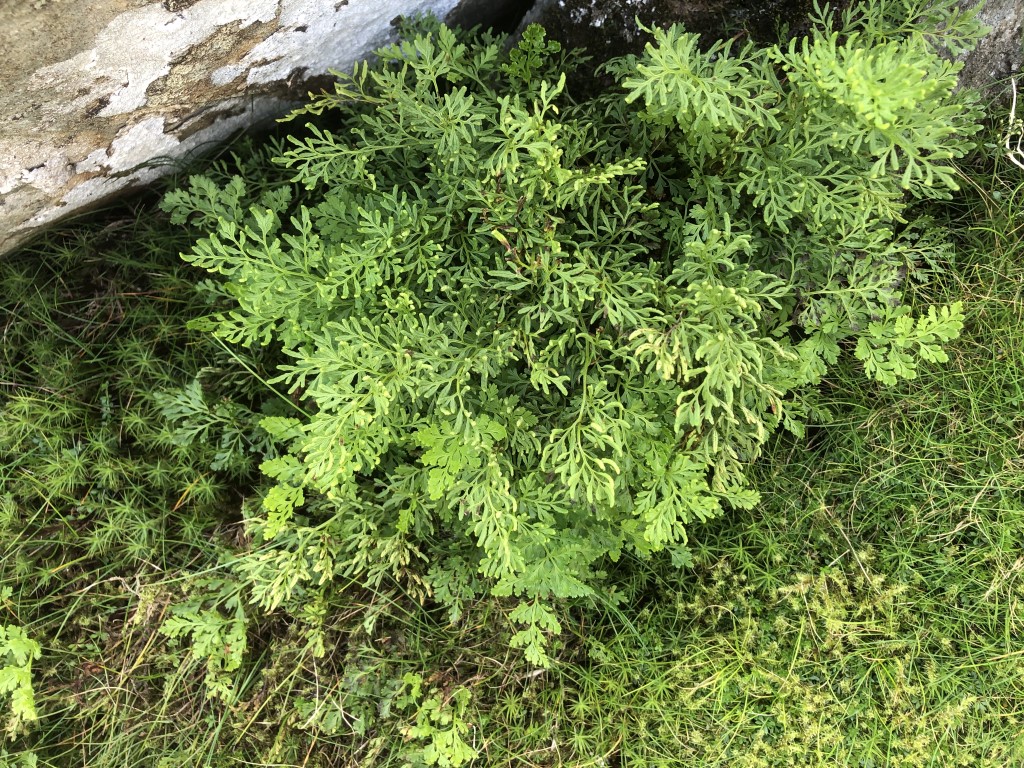
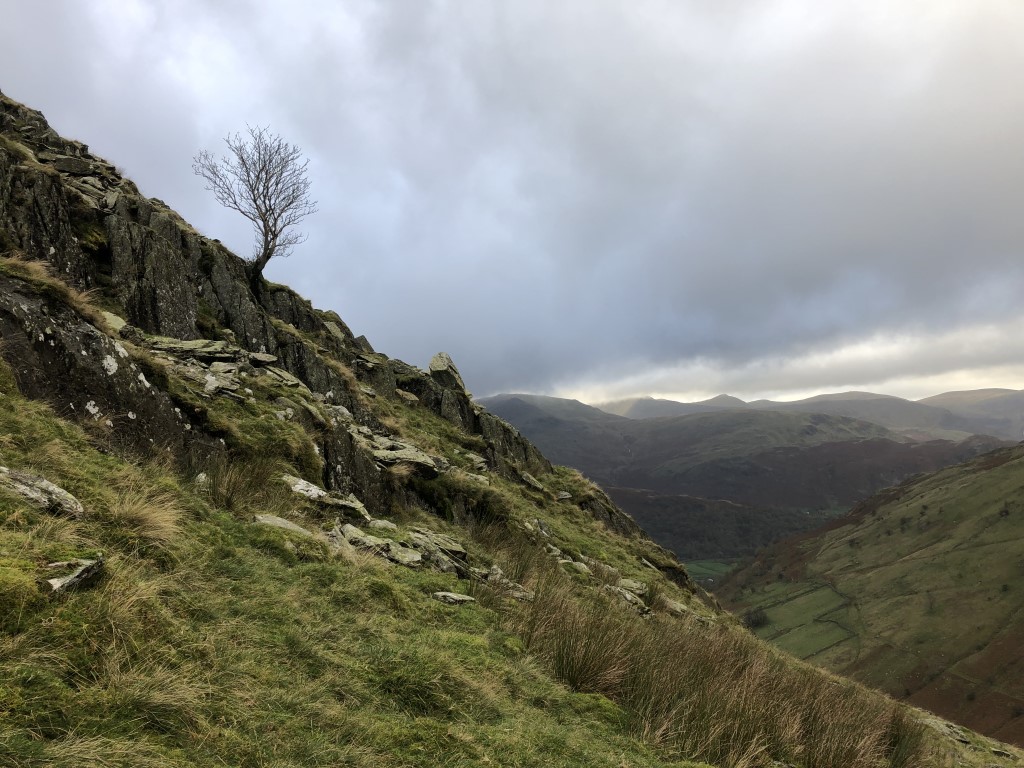
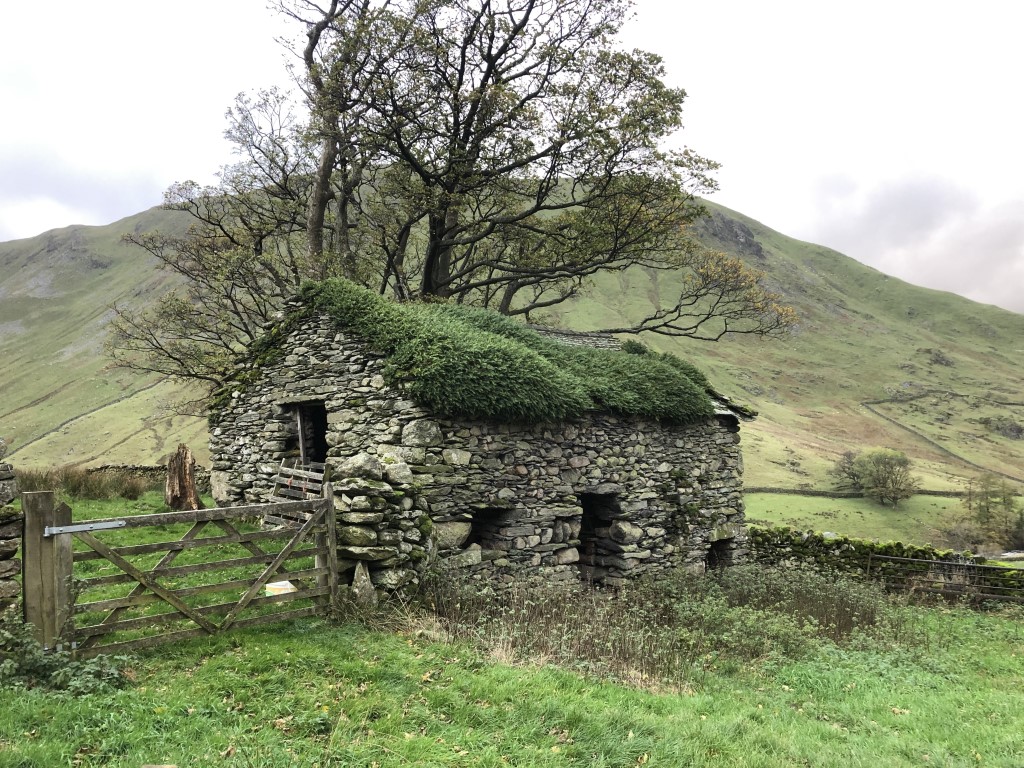
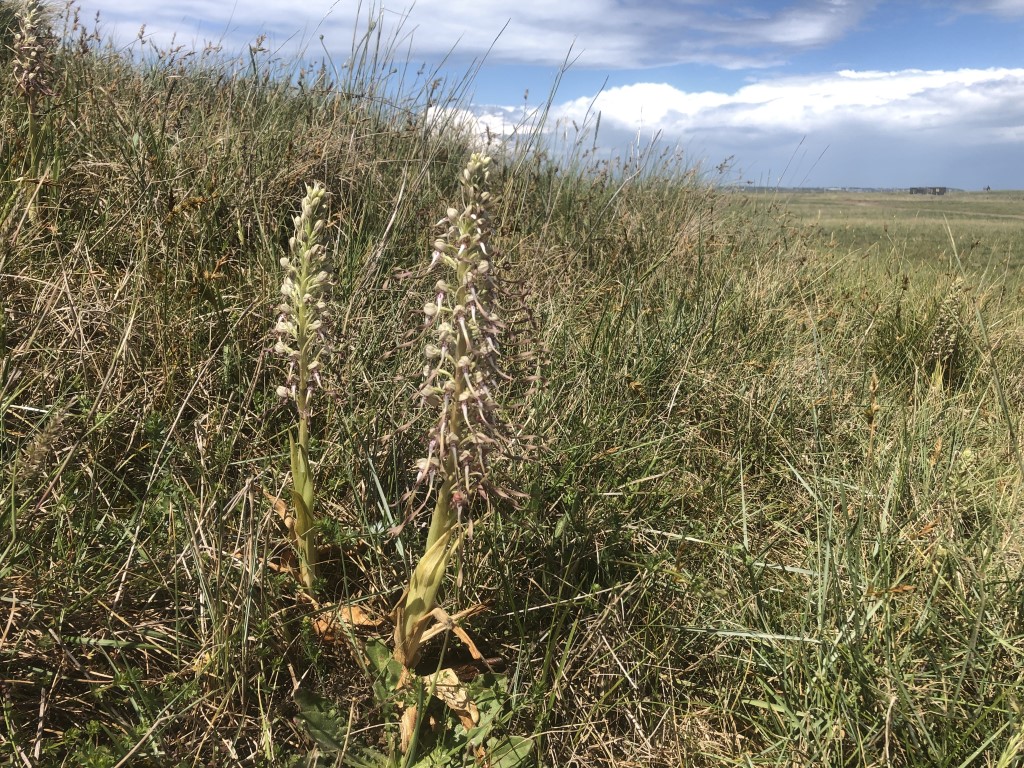
The following images were all taken in Cumbria (c) Andrew P. Chick


The following screen shot is from the excellent https://www.cumbriabotany.co.uk/ website and shows the distribution in Cumbria (2026).




Leave a comment