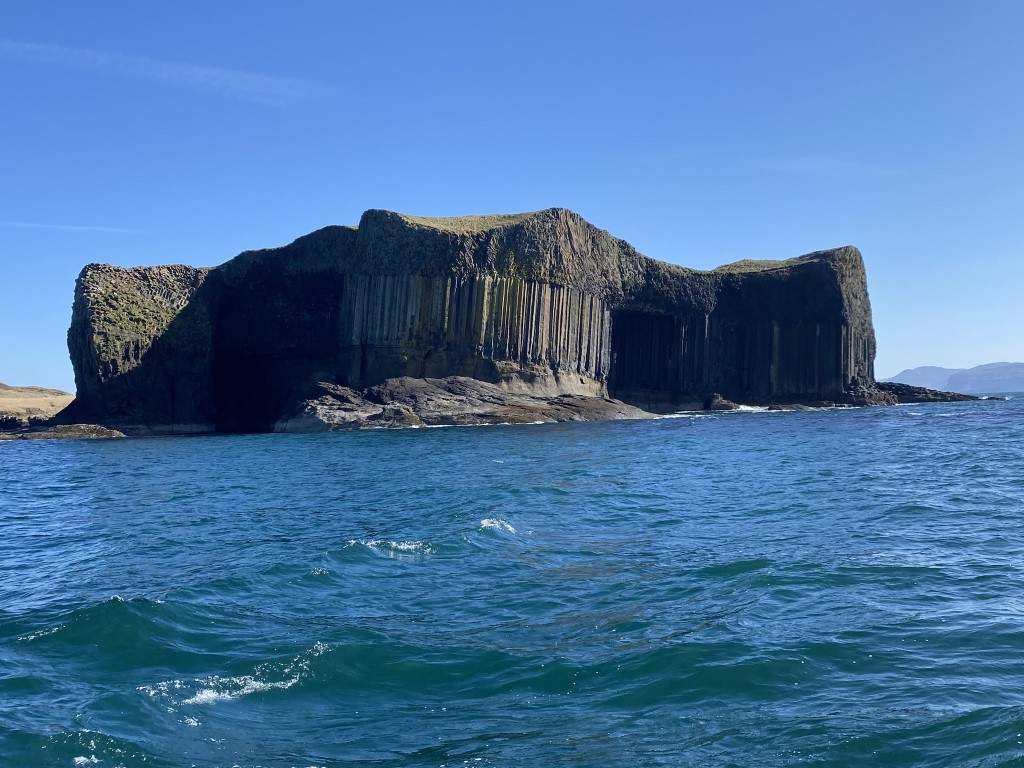
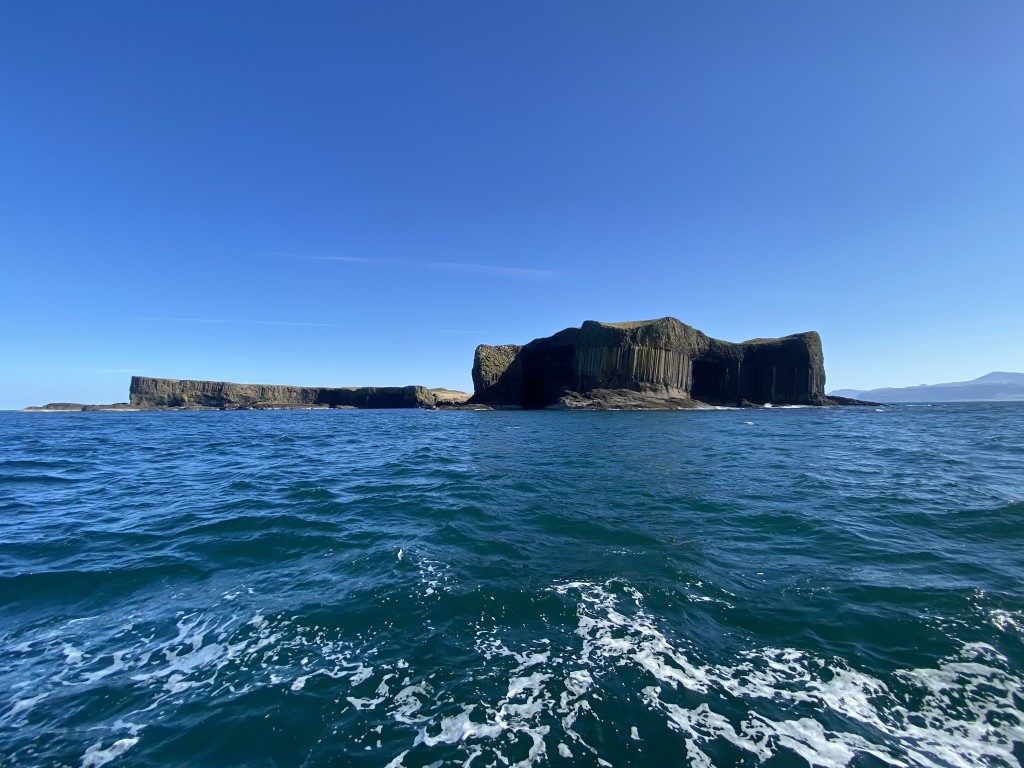
Lying off the west coast of Scotland, Staffa is one of the most distinctive islands of the Inner Hebrides. Although only a small island, roughly half a mile long, it is internationally famous for its extraordinary geology, dramatic sea caves and breeding seabirds. Its name comes from Old Norse and means “stave island”, a reference to the remarkable columns of rock that form much of its coastline.
An Island Built by Volcanoes
The feature that makes Staffa so instantly recognisable is its spectacular columnar basalt. Around 60 million years ago, during a period of intense volcanic activity associated with the opening of the North Atlantic, huge quantities of basaltic lava were erupted across western Scotland.
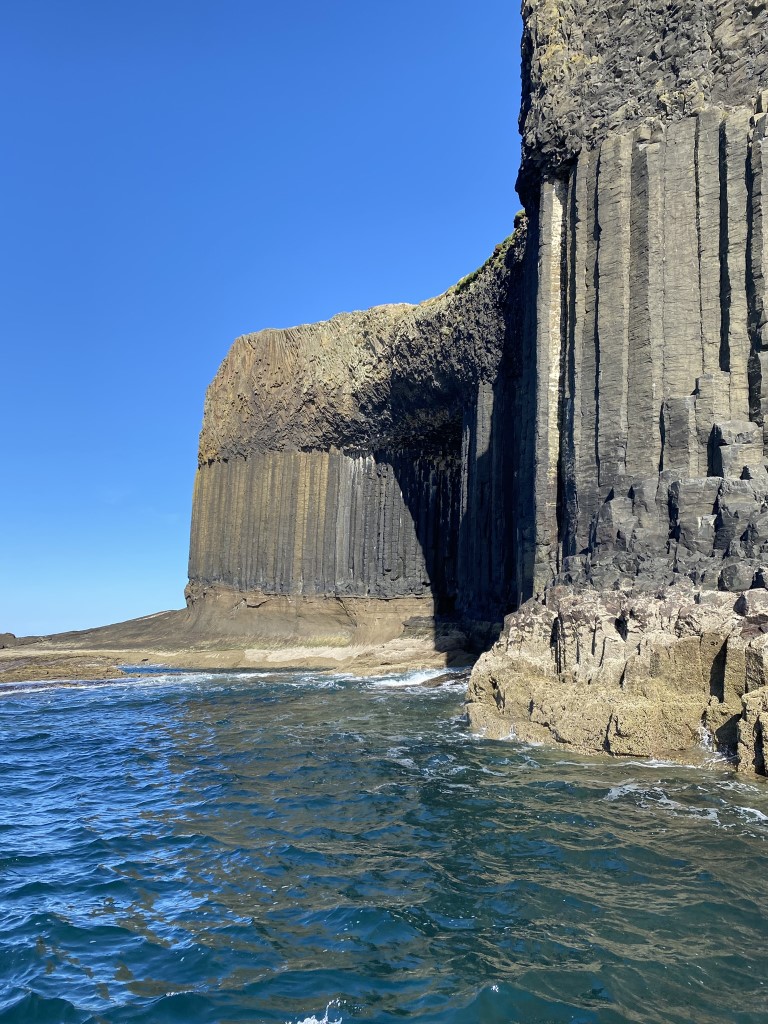
As thick lava flows cooled, they contracted and fractured into remarkably regular columns, many of them five- or six-sided. These great pillars form cliffs around Staffa and give parts of the island the appearance of an enormous constructed wall or cathedral.
The same geological processes created the famous Giant’s Causeway in Northern Ireland, and the similarity between the two places was recognised by early visitors. Staffa subsequently became an important destination for geologists as well as artists, writers and travellers.
Fingal’s Cave
The island’s best-known feature is Fingal’s Cave, a large sea cave cut into the basalt cliffs. Known in Gaelic as An Uaimh Bhinn – often translated as “the melodious cave” – it is particularly famous for its acoustics. Waves entering the cavern create booming and echoing sounds that reverberate between the basalt columns.
The cave became internationally famous during the 18th and 19th centuries as Staffa developed into a fashionable destination for travellers exploring the Scottish Highlands and islands.
Among its most celebrated visitors was the German composer Felix Mendelssohn, who visited Staffa in 1829. The experience helped inspire his Hebrides Overture, commonly known as the Fingal’s Cave Overture. Other notable visitors have included Queen Victoria, Sir Walter Scott, William Wordsworth and the artist J. M. W. Turner.
Wildlife on Staffa
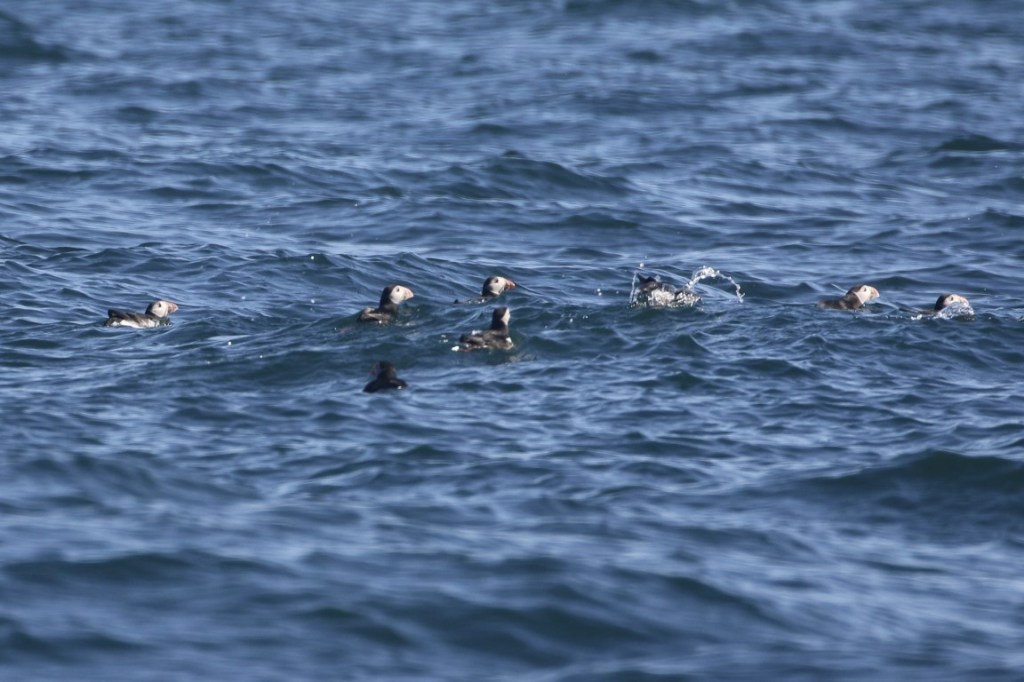
Staffa’s wildlife is almost as compelling as its geology. During spring and summer the cliffs and surrounding waters support a variety of seabirds. Atlantic Puffins are perhaps the greatest attraction, with birds returning to the island to breed and often allowing remarkably close views.
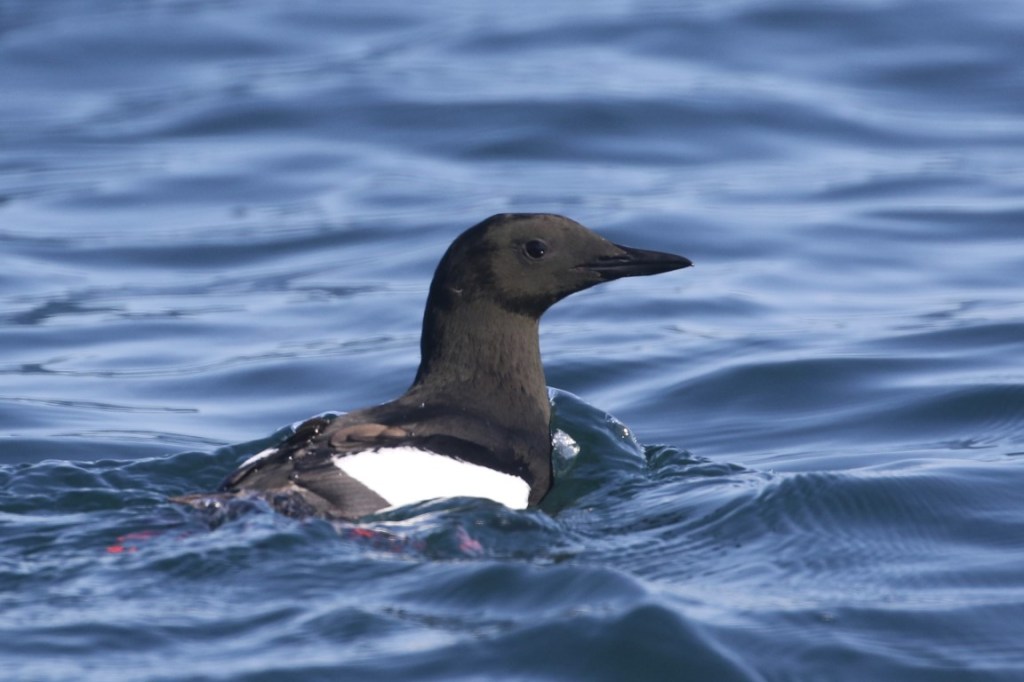
Other seabirds that can be encountered around Staffa include Common Guillemot, Razorbill, Shag, Fulmar, Kittiwake and several species of gull. The surrounding seas can also be productive for marine wildlife, with Common and Bottlenose Dolphins, Harbour Porpoise, seals and occasionally larger cetaceans seen during boat journeys to and from the island.
The puffins are particularly popular because birds on Staffa can sometimes appear remarkably unconcerned by people. One suggested explanation is that the presence of visitors discourages larger predatory gulls from approaching, making areas close to people relatively safe places for the puffins to rest.
Visiting Staffa
There are no permanent residents on Staffa and no roads or visitor facilities. Most people arrive by boat, particularly from Mull and Iona, with some excursions also operating from the mainland.
Landings are highly dependent upon sea and weather conditions. When conditions permit, visitors can walk across the island and follow the route towards Fingal’s Cave. The combination of uneven ground, exposed cliffs and slippery basalt means that some care is required.
Staffa has been cared for by the National Trust for Scotland since 1986, helping to protect both its geological features and wildlife.
A Remarkable Small Island
Few islands manage to pack so much interest into such a small area. Staffa brings together spectacular geology, cultural history and some of the characteristic wildlife of Scotland’s western seaboard. Its regimented walls of basalt appear almost artificial, while Fingal’s Cave demonstrates the enormous power of the Atlantic in shaping those ancient volcanic rocks.
Add breeding Puffins, seabird-filled cliffs and the possibility of dolphins or other marine mammals on the journey across, and Staffa becomes much more than a geological curiosity. It is one of those places where geology, wildlife and landscape combine to create one of the most memorable islands in the British Isles.



Leave a Reply