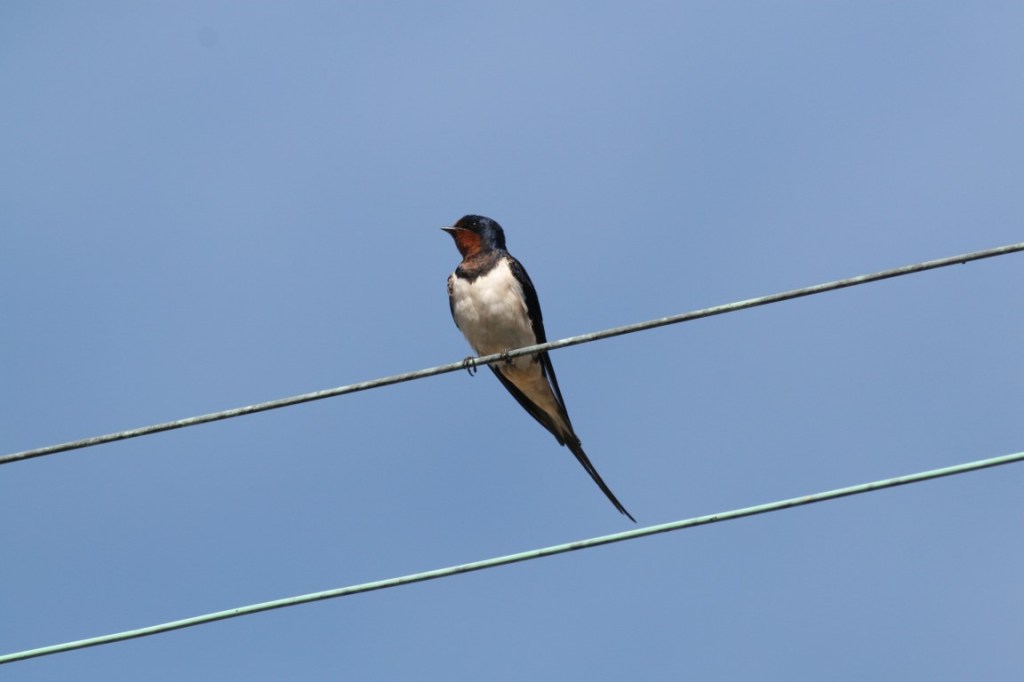
Few birds are as closely associated with the changing seasons in the English countryside as the Barn Swallow (Hirundo rustica). Their arrival in spring is one of those moments in the natural year that people have noticed and celebrated for centuries. Equally, their gathering and departure in late summer and autumn provides a gentle reminder that another summer is drawing to a close.
For much of the winter, England is without Swallows. Our birds have travelled thousands of miles south, with many spending the northern winter in southern Africa. Their return is therefore a remarkable migration, bringing them back across deserts, seas and continents to the farms, villages and buildings where many will breed.
The first Swallows usually begin appearing in England during March, although these early birds remain relatively few. It is during April that their return becomes much more obvious. There is something particularly uplifting about seeing that first familiar shape — long pointed wings and deeply forked tail — sweeping low across a field or over a lake. After months of winter, the sight seems to carry a simple message: spring has arrived.
The old proverb, “one swallow does not make a summer”, is especially appropriate. An exceptionally early bird may appear while the countryside still feels decidedly wintry, but as April progresses Swallows become increasingly familiar. Soon they are back around farms and stables, chattering from wires and beams and investigating the barns, sheds and outbuildings where they nested the previous year.
Their return also coincides with a wider transformation of the countryside. Trees are coming into leaf, hedgerows are greening, insects are becoming abundant and other summer migrants are arriving. Chiffchaffs and Blackcaps are singing, Willow Warblers return to woodland and, before long, House Martins and Swifts complete the familiar collection of summer visitors around our towns and villages.
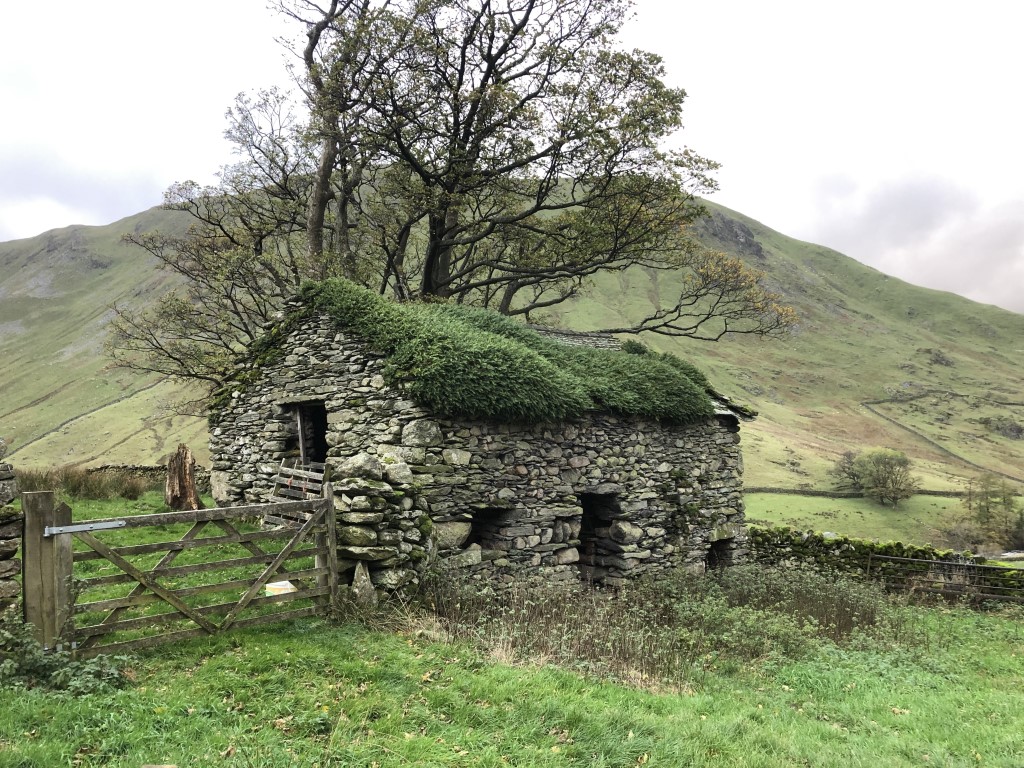
For many people, however, the Swallow remains particularly special because it lives so closely alongside us. A pair nesting on a beam inside a barn, stable or open-fronted shed can become familiar neighbours. Their mud nests may be used for several years, and the adults quickly become accustomed to the everyday movements of people, livestock and machinery around them.
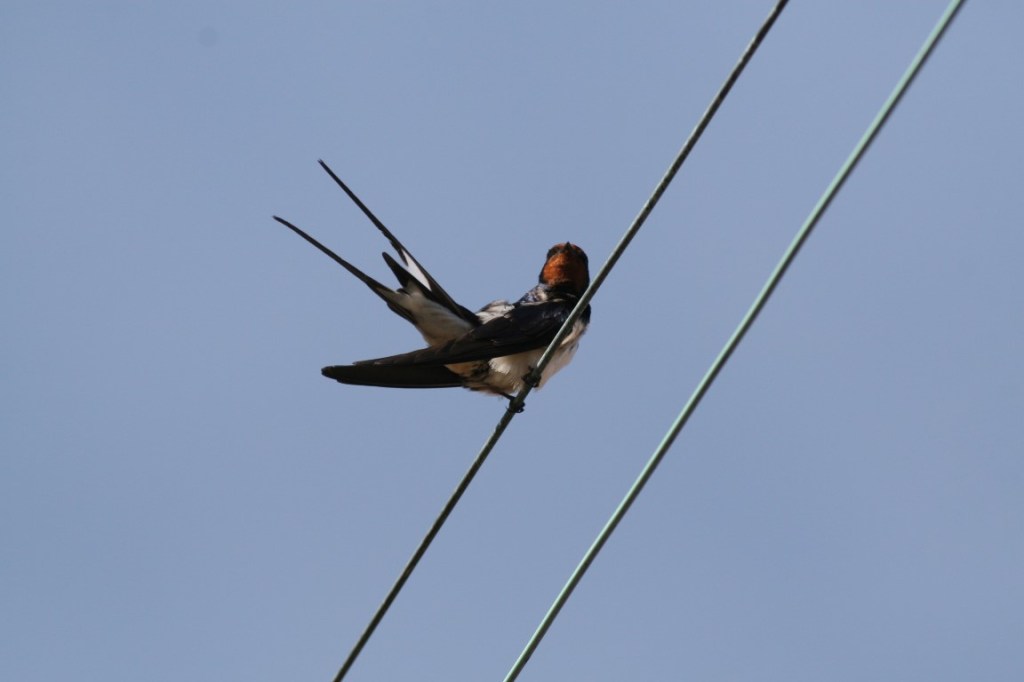
Through May, June and July, Swallows become part of the soundtrack and movement of summer. Adults sweep across meadows and farmyards catching insects, while their twittering calls drift down from overhead wires. Later, recently fledged youngsters line up together, waiting to be fed by their parents. A successful pair may raise two broods, occasionally even attempting a third in a favourable season.
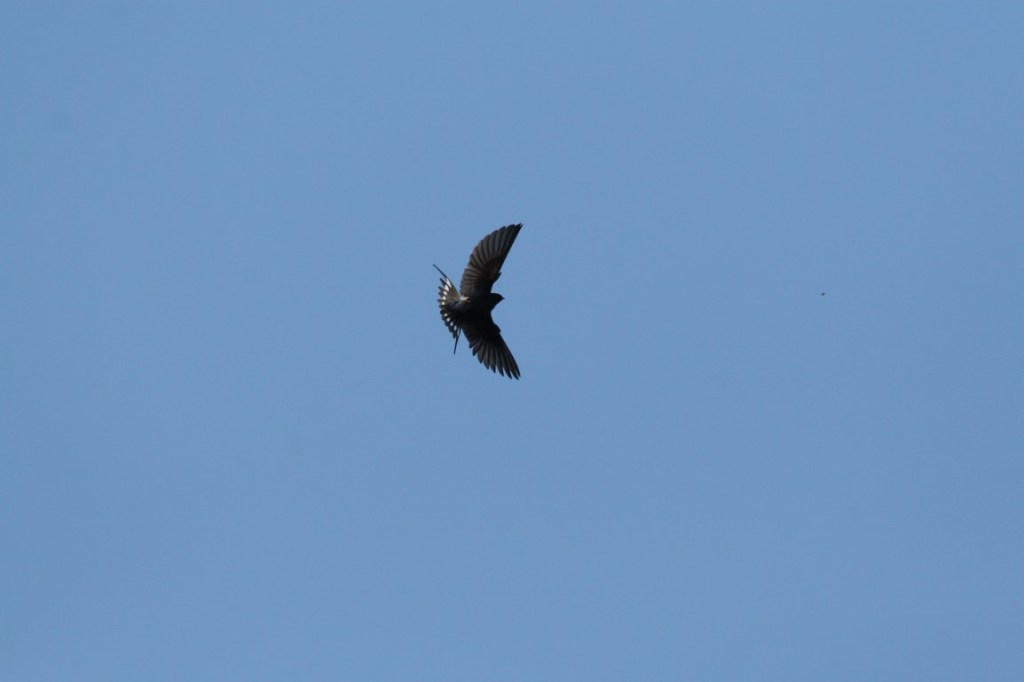
Then, almost imperceptibly, things begin to change.
By August, Swallows increasingly gather together. Family parties join other birds, and loose groups can become substantial flocks. Telegraph wires can suddenly be lined with them, while larger numbers feed together over pasture, wetlands and lakes. Reedbeds can attract impressive communal roosts as birds prepare for the journey south.
These gatherings are one of the first subtle signs of autumn. The days may still be warm and the countryside still green, but the behaviour of the Swallows tells us that summer is beginning to turn.
During September, migration becomes much more obvious. On suitable days birds can be seen steadily moving south, sometimes pausing to feed intensively where flying insects are abundant. Numbers gradually decline, although Swallows can remain well into October and occasional individuals linger later still.
Seeing the last Swallows of autumn produces a very different feeling from seeing the first bird in spring. The April Swallow represents anticipation — longer days, warmer weather and the whole summer ahead. The September or October Swallow carries a sense of departure. Soon the skies that seemed full of them will be empty again.
Perhaps this is why Swallows have such a strong place in our relationship with the seasons. Their movements occur on a human scale. We notice when they arrive at the farm, when they begin nesting, when the youngsters appear on the wires and when, eventually, they disappear.
And yet behind this familiar annual rhythm lies something extraordinary. A bird weighing only around 20 grams can leave an English barn in autumn, travel thousands of miles to Africa and, if it survives the journey, return the following spring — sometimes to the very same building.
In an age when our lives can seem increasingly detached from the natural seasons, Swallows still provide a wonderfully simple calendar.
The first Swallow brings the promise of spring; the gathering flocks announce the approach of autumn. And between the two lies an English summer.



Leave a Reply