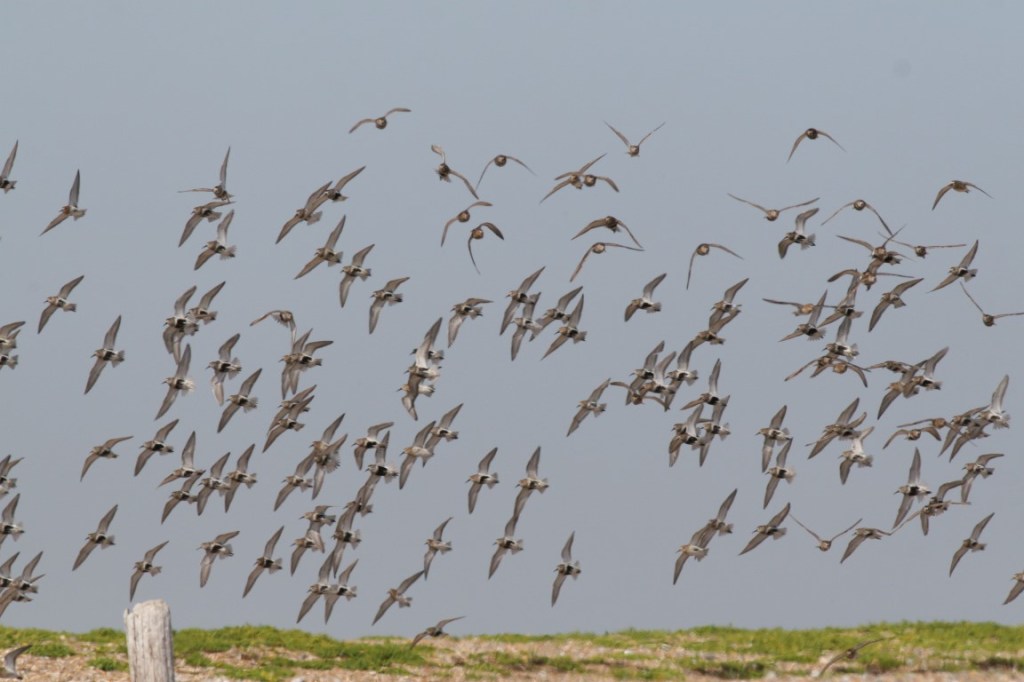
As summer begins to fade, one of the most noticeable changes around England’s estuaries and muddy coasts is the increasing number of Dunlin (Calidris alpina). Birds can be present throughout the year, but from July onwards numbers begin to build as migrants arrive from their northern breeding grounds.
The pattern is quite complex because several populations pass through Britain. Some Dunlin seen in late summer are passage migrants heading onwards towards wintering grounds in southern Europe and Africa, while many of the birds arriving from northern Scandinavia and Russia will remain to spend the winter around British estuaries. Adults generally begin moving south before the juveniles, with juvenile passage becoming particularly noticeable around late August and September.
It is at this time of year that small scattered groups can seemingly become flocks of hundreds or thousands. Favoured estuaries provide extensive areas of mud where the birds feed on small worms, molluscs and other invertebrates before gathering together at high-tide roosts.
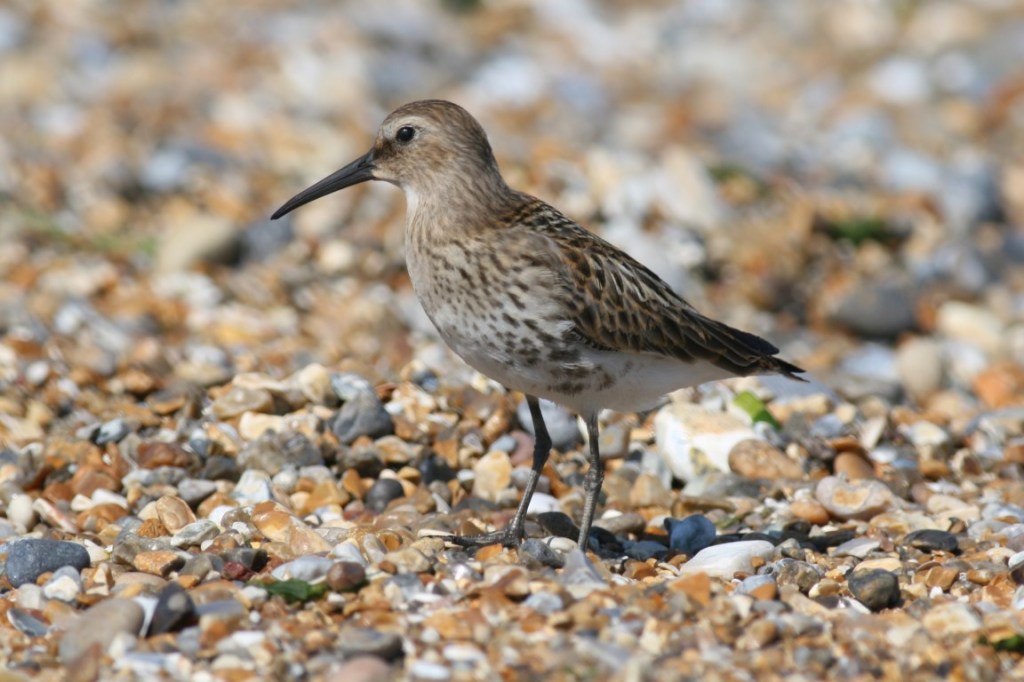
The changing plumage of the birds also reflects the changing season. The striking black belly and rich chestnut tones of summer gradually disappear, replaced by the much greyer plumage of winter. Among them, fresh juvenile Dunlin can often appear particularly neat and beautifully patterned.
Perhaps the greatest pleasure comes when the flock takes flight. Hundreds of Dunlin can twist and turn almost simultaneously, alternately flashing pale and dark as they wheel above an estuary. Like Swallows gathering on wires or the first returning geese, the growing Dunlin flocks are another wonderful indication that autumn migration is underway and the seasons are beginning to turn.



Leave a comment