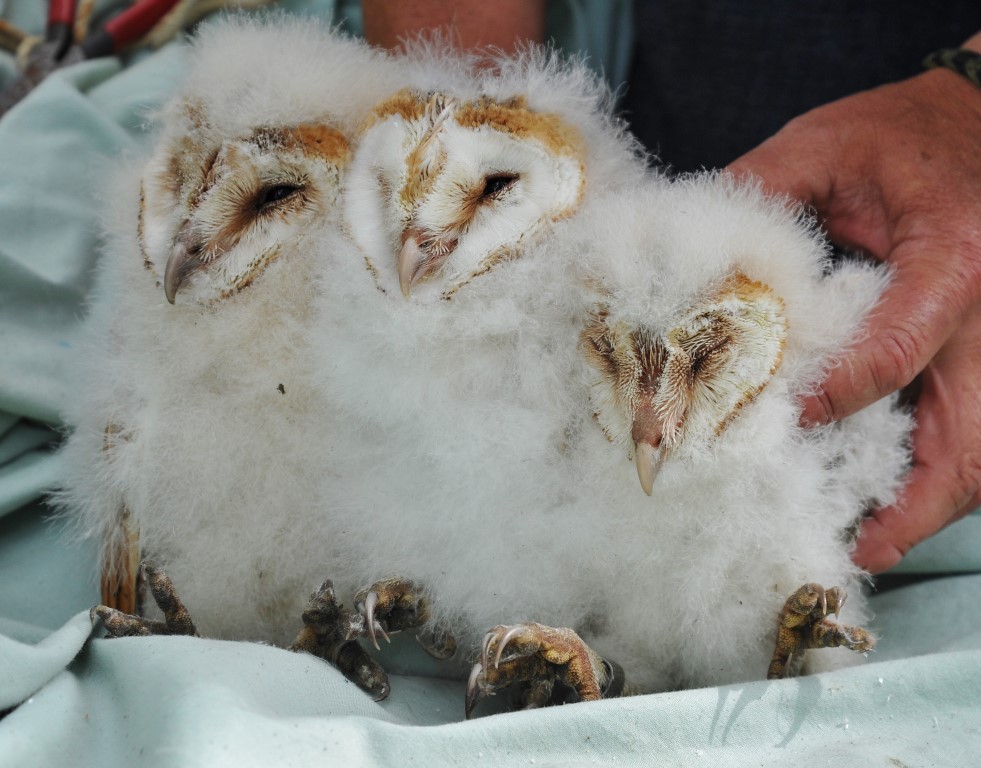
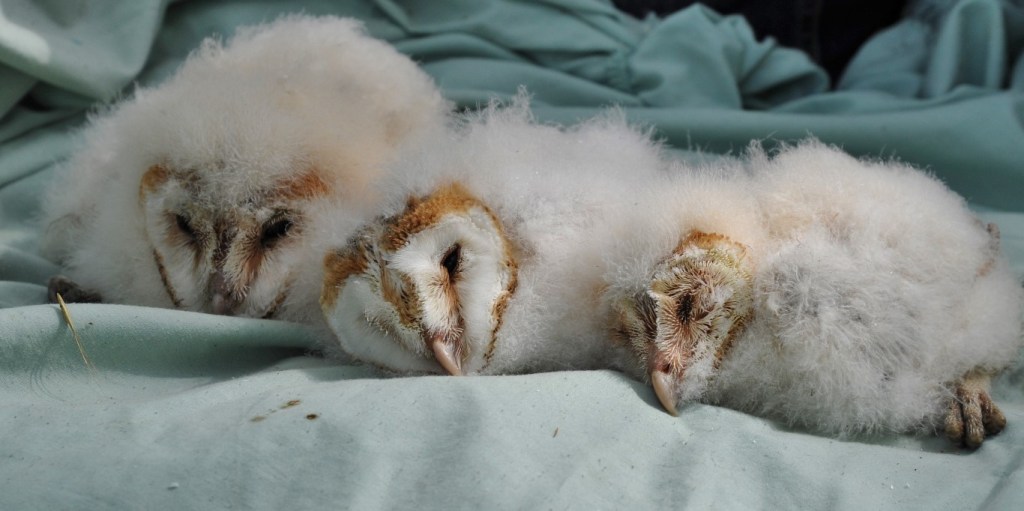
Ringing Barn Owls provides valuable scientific information that cannot be obtained simply by observing birds in the field. By fitting each owl with a uniquely numbered ring, individuals can be identified if they are subsequently recaptured or found elsewhere, allowing researchers to build a picture of their movements, dispersal, survival and longevity.
Ringing nestlings is particularly valuable because their exact age and place of origin are known. Subsequent recoveries can reveal how far young Barn Owls disperse from their natal area, whether they remain locally or move considerable distances, and where they eventually settle and breed. When ringing is carried out consistently over many years, the resulting data can also help identify changes in survival and productivity and improve our understanding of how factors such as weather, habitat and food availability affect populations.
Barn Owls are relatively long-lived birds, so a ring fitted to a chick may continue to provide information for many years. Such long-term datasets are important for understanding population trends and can contribute directly to evidence-based conservation, helping ensure that decisions about habitat management and the protection of Barn Owls are based on robust scientific information.
Ringing is undertaken by trained and licensed bird ringers, following established procedures designed to minimise disturbance and ensure the welfare of the birds. The brief disturbance involved therefore has to be balanced against the considerable scientific and conservation value of information that may otherwise be impossible to obtain.






Leave a Reply